
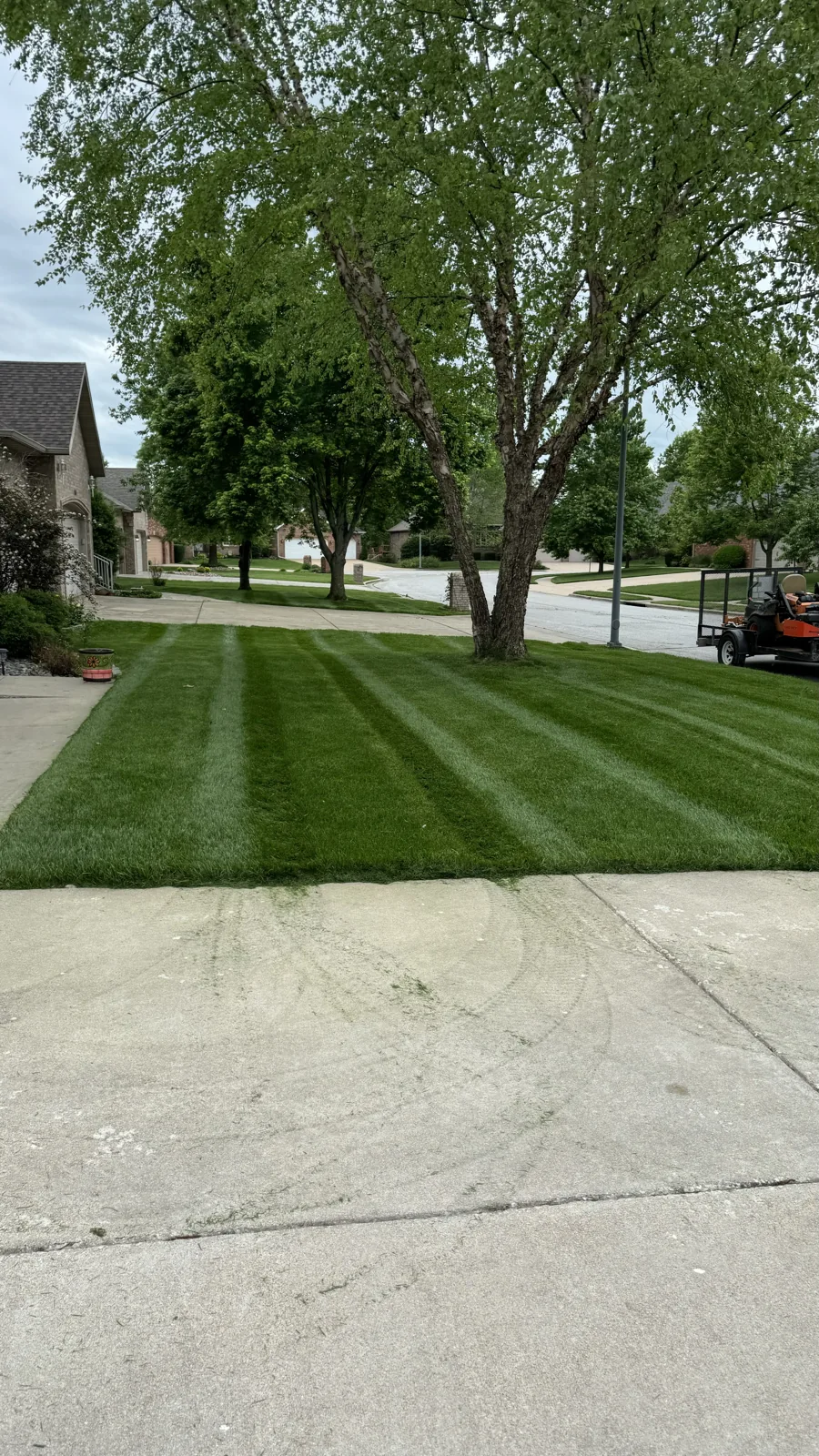
A mowing service should tell you exactly which parts of the property it will cut, what finishing work is included and what needs a separate agreement. At Pebble Creek, our standard mowing visit includes mowing, trimming, edging and blowing grass clippings off walks and drives. Use the checklist below to compare that scope with your property and written estimate before the first visit. A short agreement about the boundaries prevents more confusion than the phrase “full lawn service.”
1. Put the four core tasks in writing
For our Southwest Missouri mowing work, the core visit covers the lawn and its accessible finishing areas. The estimate still needs to identify the actual ground: front and back yards, side passages, fenced sections and any detached strip. A photograph or simple marked sketch helps distinguish your maintained lawn from a neighboring parcel, a shared area or land that needs a different maintenance plan.
Ask each provider to describe these tasks separately. One company may use “edging” to mean maintaining existing pavement borders; another may quote that work separately. The useful comparison is the written scope for your address. A general website description introduces the service, while the property assessment and accepted agreement settle the details.
At Pebble Creek, Nixa is a recurring mowing area, but address access and route fit still need confirmation. Include the backyard gate, obstacles and any difficult ground in the estimate request. Do not assume that a mower fitting the front lawn means the entire property can be serviced with the same equipment.
| Task | What to agree on | Separate work to clarify |
|---|---|---|
| Mowing | Named lawn sections and a suitable cutting height. | Overgrown recovery, rough ground or excluded areas. |
| Trimming | Accessible grass around fences, trees and buildings. | Brush, vines, woody growth or inaccessible fence lines. |
| Edging | The walks and driveway borders included in the visit. | Creating new bed edges or reclaiming buried pavement. |
| Clipping cleanup | Blowing mowing clippings off agreed walks and drives. | Bagging, hauling, leaf removal or a whole-property cleanup. |
| Final check | A way to report missed work or changed conditions. | Additional tasks and their approval before work begins. |
2. Expect a suitable cut, not simply the shortest lawn
A good scope leaves room for grass type, growth and current ground conditions. MU Extension recommends avoiding removal of more than one-third of the green leaf in one mowing and gives different cutting-height ranges by species and season. A homeowner should be able to ask what height is planned and why. The answer should relate to the lawn rather than a promise to cut every property as low as possible.
Walk the finished lawn after the crew has left. Look for conspicuous missed strips, repeated scalped spots and torn-up turns. Separate those observations from pre-existing bare areas or uneven ground documented at the estimate. If the problem is in one corner, describe that corner and send a clear photo; “the grass beside the back gate was missed” is much easier to assess than a general complaint about appearance.
Weather can change the work plan. Our lawn-care service information allows a shift to the next safe workday when rain or wet ground prevents mowing. Clarify how a delayed visit, skipped area or unusually heavy growth will be communicated. A recurring slot should not require a crew to leave ruts merely to say the lawn was cut on its usual day.
3. Define trimming and edging boundaries
Trimming addresses grass a mower cannot reach cleanly around obstacles. Edging defines the agreed pavement borders. Neither description automatically includes pruning shrubs, cutting saplings, removing vines from a fence or digging a new landscape-bed edge. Point out those needs during the estimate so they can be included deliberately or left for a separate project.
Protection of existing plants matters more than shaving every stem at a tree trunk. MU Extension explains that mulched areas around trees and shrubs can reduce mower and string-trimmer contact with stems. Identify young trees, exposed roots, irrigation parts and delicate edging before service begins. An agreed protected area is easier to maintain consistently than an unspoken expectation that the crew should cut right against everything.
Be explicit about which side of a fence is included, whether a gate can open fully and whether the strip beyond a ditch belongs in the mowing scope. A hazardous bank or road edge needs its own assessment. Leaving an agreed exclusion intact is different from missing an accessible section that the estimate says will be cut.
4. Separate clipping cleanup from a property cleanup
Short, evenly distributed grass clippings can remain on the turf. MU Extension’s Don’t Bag It guidance supports returning suitable clippings to the lawn rather than routinely removing them. Visible piles or heavy clumps are a different condition to discuss. Do not use the mere presence of small clippings as evidence that the visit was unfinished.
Pebble Creek normally leaves finely cut clippings on the lawn and blows mowing debris off walks and drives; bagging or hauling can be extra. Tell the estimator if you need collected clippings removed, have pavement that must receive special attention or want a particular disposal arrangement. Confirm the work before the visit rather than assuming the crew has collection equipment and disposal time included.
Also distinguish mowing debris from leaves, fallen branches, trash and pet waste already on the property. Seasonal cleanup, bed weeding, shrub trimming and fertilizer are separate scope items unless your selected written plan includes them. Some membership plans bundle more tasks, but the name of a plan should not replace its actual list of included work.
5. Agree on access and communicate safely
Before the visit, unlock agreed gates, keep pets away and clear toys, hoses, movable furniture and pet waste from the mowing area. Tell the provider about a changed gate code, recent construction, new wires or a hidden obstacle. Decide who is responsible for reopening or securing access afterward, and check that arrangement before releasing pets back into the yard.
If you need to speak with the crew, keep away from operating equipment and wait for the operator to stop safely. Scag’s safety guidance emphasizes keeping bystanders clear and controlling thrown-debris hazards. Do not walk into the work area to point at a missed strip. Use the agreed contact method or speak once the equipment is stopped and the operator acknowledges you.
You do not need to buy equipment to hire a mowing service. The optional hearing-protection comparison below is only for homeowners who do their own noisy touchup work between visits. NIOSH advises selecting and fitting protection for the actual exposure; the printed noise-reduction rating does not establish your individual protection. Check compatibility with glasses and headwear. Ordinary noise-canceling headphones are not a substitute for rated hearing protection, and wearing protection is not permission to approach a working mower.
6. Use a short finished-work record
After the crew has left and it is safe to walk the property, compare the result with the agreed scope. Check the named lawn sections, obstacle trimming, specified pavement edges and clipping cleanup. Note any communicated exclusions before reporting an omission. Take photos from the same accessible viewpoints when useful, so both parties can distinguish a recurring issue from a changed condition.
Keep the following record with your estimate. It is a conversation aid, not a substitute for the provider’s service terms. Include the correct contact route and ask how concerns are reviewed; do not assume a universal callback promise or add-on policy. A clear record also makes a future change straightforward: identify the task, confirm whether it is included and approve any separate work before it starts.
For a Pebble Creek estimate in Nixa, describe the whole property and the result you want. We can discuss the mowing area, access and finishing tasks together. Start with the four core tasks, then list extras plainly. That produces a useful service agreement without turning every mowing visit into an undefined landscape project.
- Lawn areas: list the front, back, sides and any separate sections included.
- Cut and finish: record the height discussion, trimming obstacles and pavement edges.
- Exclusions and extras: name rough areas, bagging, leaves, beds and any separately agreed work.
- Access: note gate arrangements, pet precautions and items the homeowner clears.
- Visit changes: record how weather delays, unsafe ground and scope changes are communicated.
- Finished-work notes: date the observation, identify the location and use the agreed contact method.
Related Lawn Guide chapters
Useful gear for this topic
Optional hearing protection for your own touchup work
No product purchase is needed to hire a mowing service. If you operate noisy equipment between visits, compare protection for that separate task. Stay clear of a working crew regardless of what protection you wear.
As an Amazon Associate, Pebble Creek earns from qualifying purchases. Your price is not increased. How we choose recommendations.
Hearing protection for outdoor power equipment
Best for: Comparing rated earmuffs, fitting instructions, replaceable cushions and compatibility with your eyewear for your own outdoor equipment use.
Select for the actual noise exposure and equipment manual. The printed NRR does not establish individual protection; glasses or headwear can affect the seal. Ordinary noise-canceling headphones are not necessarily hearing protectors. Check the exact manufacturer's rating and fitting instructions. Search results can include unrelated audio headsets. No firsthand product testing or guaranteed protection level is claimed.See current Amazon options ↗Sources and further reading
- MU Extension: Cool-Season Grasses Lawn Maintenance Calendar ↗
- MU Extension: Don’t Bag It Lawn Care ↗
- MU Extension: Low-Maintenance Landscaping (PDF) ↗
- Scag: Operation and Safety ↗
- NIOSH: Provide Hearing Protection ↗
- Pebble Creek: Lawn Care Service Scope ↗
- Pebble Creek: Nixa Lawn Care ↗
This chapter provides general educational information. Site conditions vary, and product labels and equipment manuals control whenever a product or machine is used.