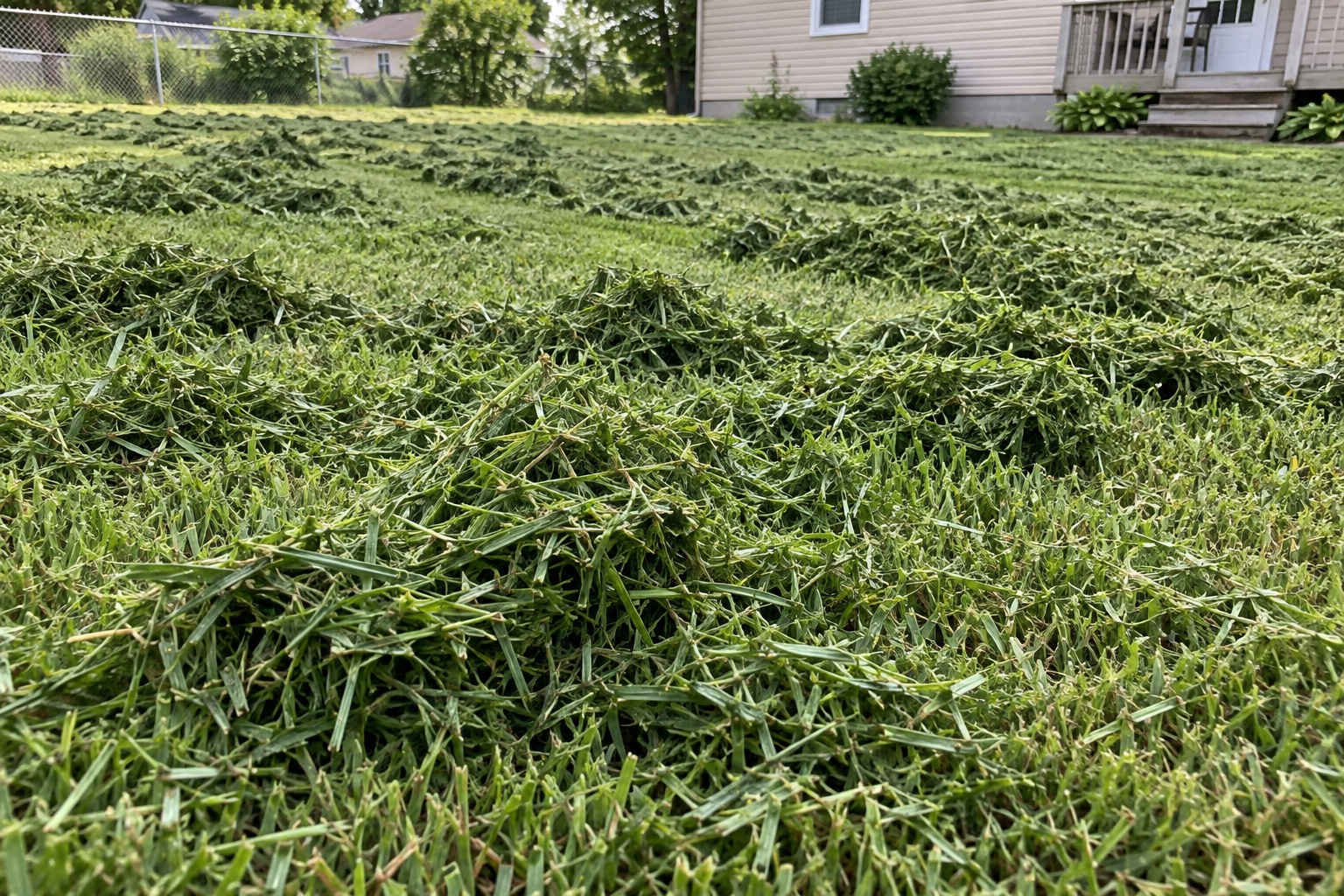
For routine mowing, mulching is usually the better choice. Finely cut clippings disappear into the turf, return useful nutrients and organic material to the soil, and eliminate the time and waste involved in bagging. Bagging still has a place, but it should be the exception—not the default.
Why mulching is our preferred method
Grass clippings contain water, nitrogen, and other plant nutrients the lawn has already absorbed. When a mower cuts those clippings into small pieces and distributes them evenly, they settle below the grass canopy and decompose naturally. That puts useful material back into the lawn instead of hauling it away.
Mulching also produces less yard waste, saves the time required to stop and empty bags, and keeps reusable organic material out of the waste stream. When the lawn is mowed regularly with sharp blades and a clean, effective mulching deck, the clippings should be nearly invisible by the time the job is finished.
Bag only when the lawn gives you a reason
Bagging is useful when clippings cannot be returned cleanly. A wet or badly overgrown lawn may produce heavy clumps that shade the grass underneath. Collection can also make sense when disease is present, weeds are setting seed, or the lawn contains debris that should not be spread across the property.
Even then, bagging is not always the first answer. Letting wet turf dry, raising the mowing height, making a second pass, or redistributing a few visible rows can often preserve the benefits of mulching while still leaving a polished finish.
- Collect clippings contaminated with trash, pet waste, disease, or material that should not be spread.
- Avoid blowing clippings into streets, storm drains, planting beds, or neighboring properties.
- Break up rows and piles before leaving the job.
- Clean the deck safely with the equipment shut down and secured.
Mulched clippings do not automatically create thatch
One of the most common arguments for bagging is the belief that clippings cause thatch. Thatch is actually a layer of slowly decomposing stems, roots, and crowns between green growth and soil. Properly sized leaf clippings contain a great deal of water and break down relatively quickly.
Excessive fertilizer, certain grass species, compacted conditions, and poor biological activity are more meaningful thatch factors than ordinary clipping return. On a healthy lawn that is mowed at the right interval, mulching should help recycle nutrients without leaving a visible layer behind.
The Pebble Creek standard
We prefer to mulch clippings whenever turf conditions allow because it is efficient, responsible, and beneficial to the lawn. The finished property should never look like clippings were simply left behind: material should be finely processed, evenly distributed, and nearly invisible.
If the grass is too wet, too tall, or producing more material than the mower can process cleanly, we adjust the approach rather than forcing it. Bagging remains a useful cleanup tool, but for normal mowing, a properly mulched lawn is the better result.
Related Lawn Guide chapters
Useful gear for this topic
Build the right clipping-management setup
Mulching should be the normal choice, but the mower still needs the right blade, airflow, and exact-fit hardware—and a bagger remains useful for the exceptions described above.
As an Amazon Associate, Pebble Creek earns from qualifying purchases. Your price is not increased. How we choose recommendations.
Mulching blade for your exact mower
Best for: Processing routine clippings into smaller pieces that settle back into the turf.
Match the mower model, blade length, center hole, lift, and manufacturer part number before ordering.See current Amazon options ↗Mulching kit or discharge plug for your mower
Best for: Closing the discharge path and keeping clippings inside the deck long enough to be cut more finely.
Buy only a kit specifically listed for the mower model and deck size; universal fit claims can be misleading.See current Amazon options ↗Grass catcher or bagger for your exact mower
Best for: Occasional collection when turf is overgrown, diseased, wet enough to clump, or full of material that should not be redistributed.
Confirm mower model, deck width, chute, mounting hardware, and manufacturer fitment before ordering.See current Amazon options ↗Sources and further reading
This chapter provides general educational information. Site conditions vary, and product labels and equipment manuals control whenever a product or machine is used.