
Lawn aeration is worth considering when compacted soil is limiting a Republic yard—not simply because a fall special arrived in the mail. Before booking, answer three questions: is there a problem aeration can help, is the lawn ready for the work, and can equipment operate without damaging buried utilities or irrigation? This checklist helps you decide what to ask for, what to postpone and what to include in the estimate.
1. Start with the problem, not a yearly package
MU Extension identifies repeated traffic and soil sealing or compaction as barriers to healthy turf growth. Note where people, pets or equipment repeatedly travel and whether those areas perform differently from less-used turf. That is a reason for an inspection, not proof that every thin or brown patch needs aeration.
Write a specific goal: improve a worn traffic strip, prepare a thin area for overseeding, or investigate poor water entry. Photograph the affected area and include a wider view showing where water and traffic come from. Avoid ordering whole-yard treatment before establishing whether the problem is limited to one section.
Ask the person assessing the lawn to explain why aeration fits that goal. If the explanation is only 'every yard needs it,' ask what was observed on yours. This guide is a service-decision checklist; it does not replace identifying the cause of a persistently unhealthy patch.
2. Ask for core aeration, and choose a recovery window
The Missouri Botanical Garden distinguishes hollow-tine core aeration, which removes soil plugs, from solid spikes, which push soil aside. Spikes do not provide the same soil removal and can contribute to compaction around the holes. Ask what tool will actually be used; the word 'aeration' alone is not a complete scope.
For cool-season lawns such as tall fescue, the Garden favors late August through September, near active growth. MU's Missouri maintenance calendar also lists September aeration where needed and an April option for compacted or heavily thatched lawns. Its timing is approximate and varies with region and annual weather. A Republic address does not make a stressed lawn ready.
If you are reading this in October, do not treat publication day as a recommendation to rush a fall package. Have the lawn's current growth, soil condition and remaining establishment window assessed, especially if seed is included. Warm-season grass needs a different seasonal plan; identify the grass before accepting a fescue schedule.
3. Use the aerate-or-wait check before equipment arrives
MU's lawn-establishment guidance calls for moist soil that lets hollow tines penetrate and remove cores. Hard, dry soil can prevent penetration; wet soil can clog the tines. Schedule flexibility matters more than keeping an appointment at any cost.
Agree in advance who will decide whether to proceed after rain and how a delay will be communicated. Do not soak an already wet lawn to follow a generic 'water before we arrive' instruction. A trial in a cleared, suitable area should produce actual cores—not merely dents—and should not leave the operator fighting the ground.
Use the following as a conversation starter, not a remote diagnosis. If more than one row applies, resolve the safety or soil-readiness issue first. A paid booking does not remove the need to stop when conditions are wrong.
| What you find | Decision | Before proceeding |
|---|---|---|
| Identified compaction; actively growing turf; workable moist soil | Consider core aeration | Confirm safe access, utility clearance and exact work area. |
| Dry, hard ground or stressed turf | Wait and reassess | Agree on preparation and a recovery window; do not force equipment. |
| Wet, smeary soil or persistent standing water | Postpone and investigate | Do not assume holes will solve the source of the wet area. |
| Buried-line locations or equipment access are uncertain | Do not start | Resolve locating and access before any ground penetration. |
4. Clear the underground hazards—not just the toys
Before ground-penetrating work, contact Missouri 811, describe the planned aeration and follow its current ticket and response requirements. Its current guidance calls for at least three full working days before excavation. Check the response status and required markings before work; a shallow tool is not a reason to assume buried lines are safe.
Republic's Public Works FAQ makes an important local distinction: utility-company or city-owned facilities are not the same as homeowner-owned service lines. It directs owners with questions about their water and sewer service-line locations to prior owners, builders or a licensed plumber. Use that local resource to identify the next contact—not as a substitute for the current Missouri 811 process.
Missouri 811 also explains that private facilities, such as irrigation and power to an outbuilding, may need a separate private locator. Include invisible dog fencing, landscape wiring, valve boxes and sprinkler heads in the site discussion. Surface flags you place yourself do not establish underground clearance; do not move official locate marks or operate through protected areas.
Give the operator a simple property sketch with confirmed exclusions and explain which locations are still uncertain. Keep pets and children away during the work. If a location cannot be established safely, leave that area out until it can be resolved rather than hoping a tine misses it.
5. Separate aeration, seed and aftercare in the estimate
Ask for the lawn area being treated, the equipment type, excluded areas and whether overseeding is included or priced separately. Measure the narrowest gate opening and describe slopes, steps and access restrictions. Ask the operator to confirm equipment suitability rather than assuming anything that reaches the driveway can reach the backyard.
MU explains that core aeration can prepare a seedbed and improve seed-to-soil contact. That does not mean an aeration booking automatically includes seed, fertilizer or irrigation setup. If seeding is planned, record the grass selection, seed amount and establishment-care responsibility as separate decisions; check restrictions on any recent lawn treatment before adding seed.
A manual hollow-tine tool may suit a small, safely accessible patch; a whole lawn can be a very different time and physical-effort commitment. Compare a rental or a service quote with the actual area and your ability to operate the equipment. Our optional product comparison below is for small-area tools, not a claim that a hand tool fits every property.
- What problem and exact area are we treating?
- Is this hollow-tine core aeration, and how will coverage be checked?
- What must be located or excluded, and who confirms readiness?
- Are seed and follow-up care included? Who handles them?
- What happens if weather or soil conditions require postponement?
6. Check the work, then judge recovery over time
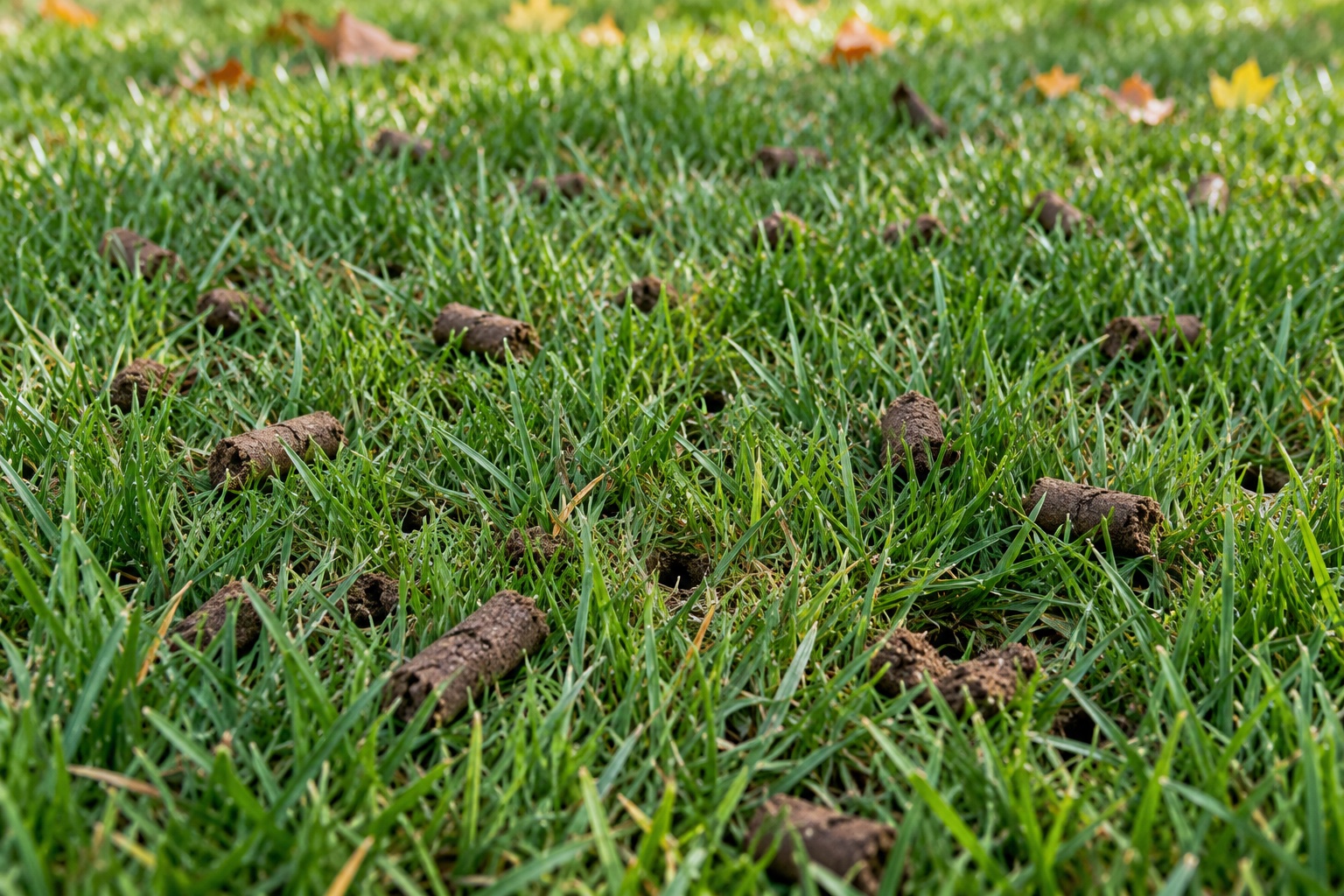
The Missouri Botanical Garden notes that removed cores are normally left on the lawn to break down. Their presence is not automatically an unfinished cleanup. Confirm that expectation before the visit, along with any site-specific access concerns and the instructions for returning to normal use.
At handoff, compare the treated area with the agreed scope. Record the date, any areas skipped and the reason, whether seed was applied, and the next care steps. Keep photos from the same viewpoints as your initial inspection. Those details are more useful than expecting an instant color change on the day holes appear.
If you are requesting help from Pebble Creek in Republic, send the problem-area photos, gate width and whether you want seeding considered. Ask us to confirm the available service and scope in the estimate. A useful plan should leave you knowing why the work is recommended, what is included and what you need to do afterward—not just the suggested appointment date.
Related Lawn Guide chapters
Useful gear for this topic
Compare a core tool only if the small-area plan fits
You do not need to buy equipment to request an assessment. Compare a service or rental with your work area first. This optional category comparison is not a field-tested endorsement; check that the tool removes cores rather than making spike holes.
As an Amazon Associate, Pebble Creek earns from qualifying purchases. Your price is not increased. How we choose recommendations.
Manual hollow-tine core aerator for a small area
Best for: Comparing tools that actually remove soil plugs, with manageable handle height, foot support and clear tine-cleaning instructions for a small, accessible patch—not a whole-yard recommendation.
Search results may include solid spikes: verify hollow tines and the exact manual. Confirm underground clearance, soil readiness and your physical ability before use. Do not force a tool into dry ground or an obstruction; follow cleaning and protective-equipment instructions. No firsthand use of these listings is claimed.See current Amazon options ↗Sources and further reading
- MU Extension: Cool-Season Grasses—traffic, compaction and seasonal aeration ↗
- Missouri Botanical Garden: Core aerification, spikes, timing and surface cores ↗
- MU Extension: Cool-Season Grasses—Lawn Establishment and Renovation ↗
- Missouri 811: Current locating and response requirements ↗
- Republic Public Works: Utility locating and homeowner-owned service lines ↗
- Missouri 811: Public vs. private utility lines ↗
- Yard Butler: Example of a manual hollow-tine core tool—not a field-tested endorsement ↗
This chapter provides general educational information. Site conditions vary, and product labels and equipment manuals control whenever a product or machine is used.