
Fall is not the time to stop paying attention to tall fescue. It is the time to turn a summer survival plan into a recovery plan. For Southwest Missouri homeowners, the useful question is not ‘Which fall product should I buy?’ It is ‘What does this lawn need first?’ Start with mowing and moisture, check the soil, then decide whether feeding, aeration, or repairing thin areas belongs on the calendar. Here is the overview; our separate guides handle individual tasks in more detail.
Start with a walk-through, not a shopping list
Walk the whole property before booking work or buying supplies. Mark bare areas, thin grass, heavy shade, compacted paths, and places that stay wet. Photograph the same spots from the same angle so later comparisons mean something. An overall picture and a close view tell a clearer story than a single photograph of brown grass.
For a Pebble Creek service request, include your address, whether you irrigate, and what has already been applied this season. Separate ‘keep the lawn maintained’ from ‘repair this section.’ That helps us discuss the actual work instead of treating every yard in Nixa, Ozark, or the surrounding service area as the same project. This plan is for cool-season tall fescue; do not transfer its fall feeding schedule to zoysia or bermudagrass.
September: make the recovery decisions early
MU Extension identifies September as an important window for cool-season lawn feeding and early planting. It also places needed aeration and thin-area repairs in this period. Think of September as decision time, not a promise that every September day is suitable. Look at current moisture and weather, and avoid stacking several treatments together without checking that they are compatible.
A lawn with good coverage may need routine care rather than more seed. A lawn with bare ground needs a repair plan that addresses the cause, not just a bag scattered over the surface. Write down which areas need maintenance and which need renovation. If you need outside help, arrange the assessment early enough to leave time for preparation and follow-up care.
Test the soil before choosing lime or extra nutrients
MU Extension recommends periodic testing on established lawns and testing before establishment. A laboratory report can guide pH correction and phosphorus or potassium decisions. Yellow or thin grass is not, by itself, evidence that the lawn needs lime. Routine fertility tests also do not provide a simple, stable soil-nitrogen reading; nitrogen planning still depends on grass type, growth, and the maintenance program.
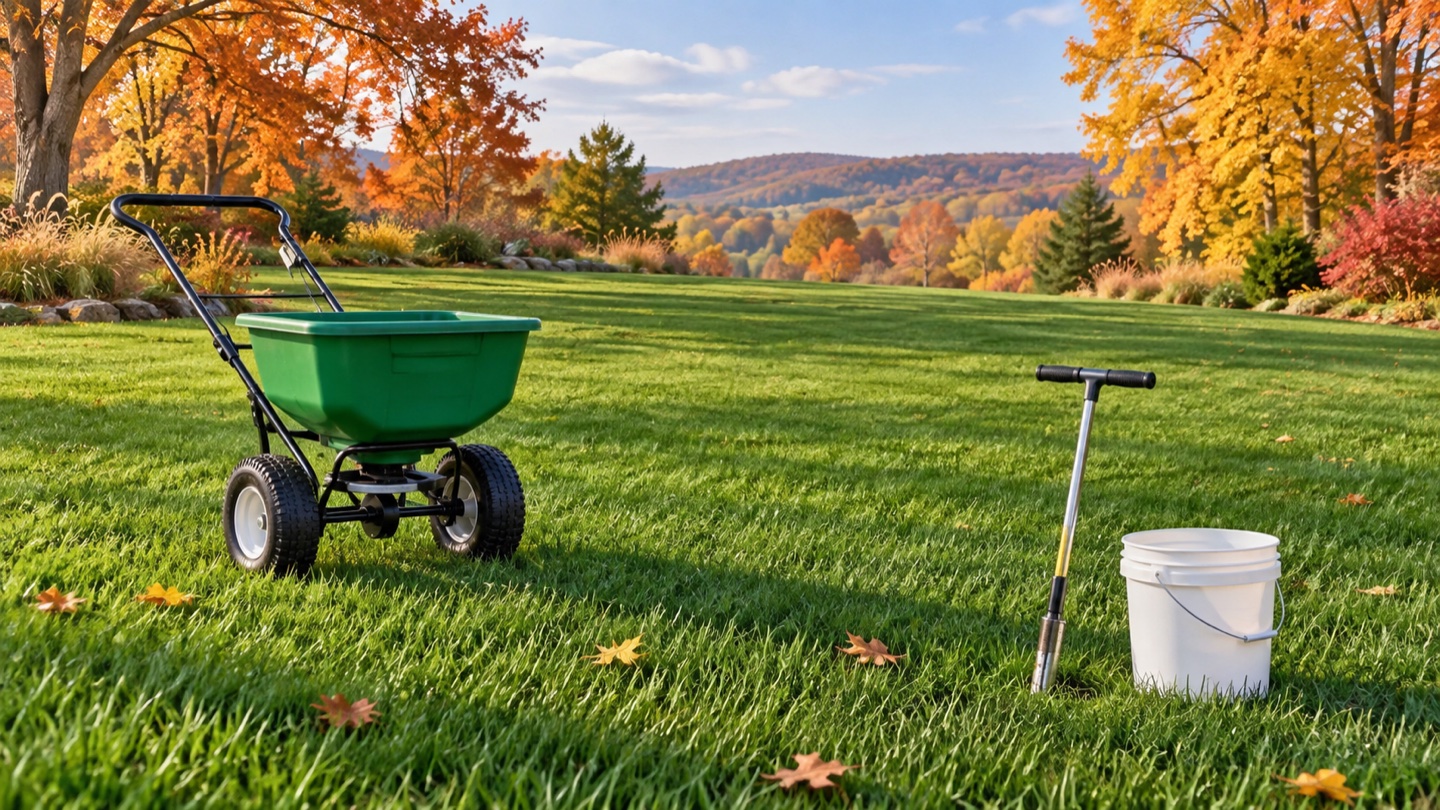
Follow the receiving laboratory's sampling instructions for your situation. Collect several representative cores, keep distinctly different areas separate, and mix the sample in a clean plastic container rather than a metal bucket. A soil probe can make consistent cores easier, but a suitable shovel can also work. Label the sample with the area it represents and keep the report with your lawn records.
Feed deliberately, and measure the area first
Fall feeding is a major part of tall-fescue care, but ‘fall’ is not an application rate. Use a locally appropriate fertilizer plan, the product label, the lawn's condition, and its application history together. MU's calendar includes September feeding and moderate later-fall feeding as growth slows. Do not add another full application simply because a second bag says ‘winterizer.’
Measure the lawn area you will actually treat, excluding pavement and beds, and write that area beside the product's labeled coverage. Compare a spreader's controllable pattern, shutoff, and ease of calibration rather than buying solely for hopper size. Settings are product- and machine-specific. Keep material off hard surfaces and out of drains, and follow label directions for watering and use around people or pets. If someone else treats the lawn, get their application record before adding anything yourself.
Keep mowing; adjust water to conditions
Cooler weather does not mean the grass has stopped growing. Continue mowing at an appropriate regular height until growth stops, removing no more than one-third of the leaf in a pass. Do not give an established lawn a drastic short cut just to ‘put it away’ for winter. Our mowing-height and one-third-rule guides explain how to set the target and judge the interval.
Do not leave an established lawn's irrigation controller on an unchanged summer program. Check rainfall and the soil before adding water. MU's watering guide identifies folded leaves, a bluish cast, and lasting footprints as possible moisture-stress signs, but warns that wet soil can also accompany wilt. Adding water to already wet ground can make matters worse. Water when needed, prevent runoff, and follow local restrictions. Newly seeded areas need a separate establishment plan; they should not automatically share the established lawn's watering schedule.
Repair and aerate where needed—not everywhere by default
K-State's tall-fescue guidance identifies fall as a useful time to core-aerate compacted soil and recommends aerating before overseeding when both are needed. Core aeration removes plugs; it is not the same as simply pressing holes into the ground. Discuss equipment access and mark irrigation components or other vulnerable features before work begins.
September is generally a favorable seeding period for this region, but successful establishment still needs preparation and continuing moisture. Check any recent herbicide labels for reseeding restrictions before planning repairs. Do not combine a weed-control product and new seed just because both are sold for fall use. The next article covers overseeding timing specifically; this overview is about deciding whether that work belongs in your plan at all.
October and November: protect the progress
Keep fallen leaves from forming a packed blanket over the turf. Light leaves can be mulched when they break down and disperse; heavier material should be collected rather than left to hide the grass. Watch conditions after each leaf drop instead of waiting for a single final cleanup. Continue checking growth and moisture through the end of the mowing season.
Keep a simple record: mowing dates, rainfall or irrigation, products and amounts applied, repair areas, and photographs. At the end of fall, compare those marked spots with your starting pictures. For your next Pebble Creek visit, tell us what improved and what still needs attention. The objective is a manageable, documented care plan—not doing every possible lawn task in one weekend.
- First: inspect the lawn, gather treatment records, and arrange a soil test if due.
- Next: choose needed repairs and a coordinated feeding plan.
- Throughout fall: mow by growth, water by conditions, and keep leaves from smothering turf.
Related Lawn Guide chapters
Useful gear for this topic
Tools worth comparing
These links help you compare the right type of product without replacing the equipment manual, product label, or an exact fitment check.
As an Amazon Associate, Pebble Creek earns from qualifying purchases. Your price is not increased. How we choose recommendations.
Walk-behind broadcast spreader
Best for: Comparing a compact broadcast spreader with a larger walk-behind model by shutoff control, edge control, calibration instructions, and the size of your measured lawn—not hopper size alone.
Check the exact product label and spreader manual. Calibrate for the material, measure the treatment area, keep granules off pavement and out of drains, and coordinate with any existing fertilizer program. We do not claim to have tested these listings.See current Amazon options ↗Soil-sample probe
Best for: Comparing open-sided and T-handle soil probes for collecting consistent cores for a laboratory test. A suitable shovel you already own may be enough.
Follow your laboratory's sampling depth and collection instructions; the probe does not test nutrients itself. Avoid buried services and irrigation, do not force it into hard soil, and compare handle comfort and core-removal design before buying.See current Amazon options ↗Sources and further reading
- MU Extension: Cool-Season Grasses—Lawn Maintenance Calendar ↗
- MU Extension: Soil Testing for Lawns ↗
- MU Extension: Home Lawn Watering Guide ↗
- K-State Research and Extension: Tall Fescue Lawns ↗
- MU Extension: Consider Lawn Needs in Fall ↗
This chapter provides general educational information. Site conditions vary, and product labels and equipment manuals control whenever a product or machine is used.