
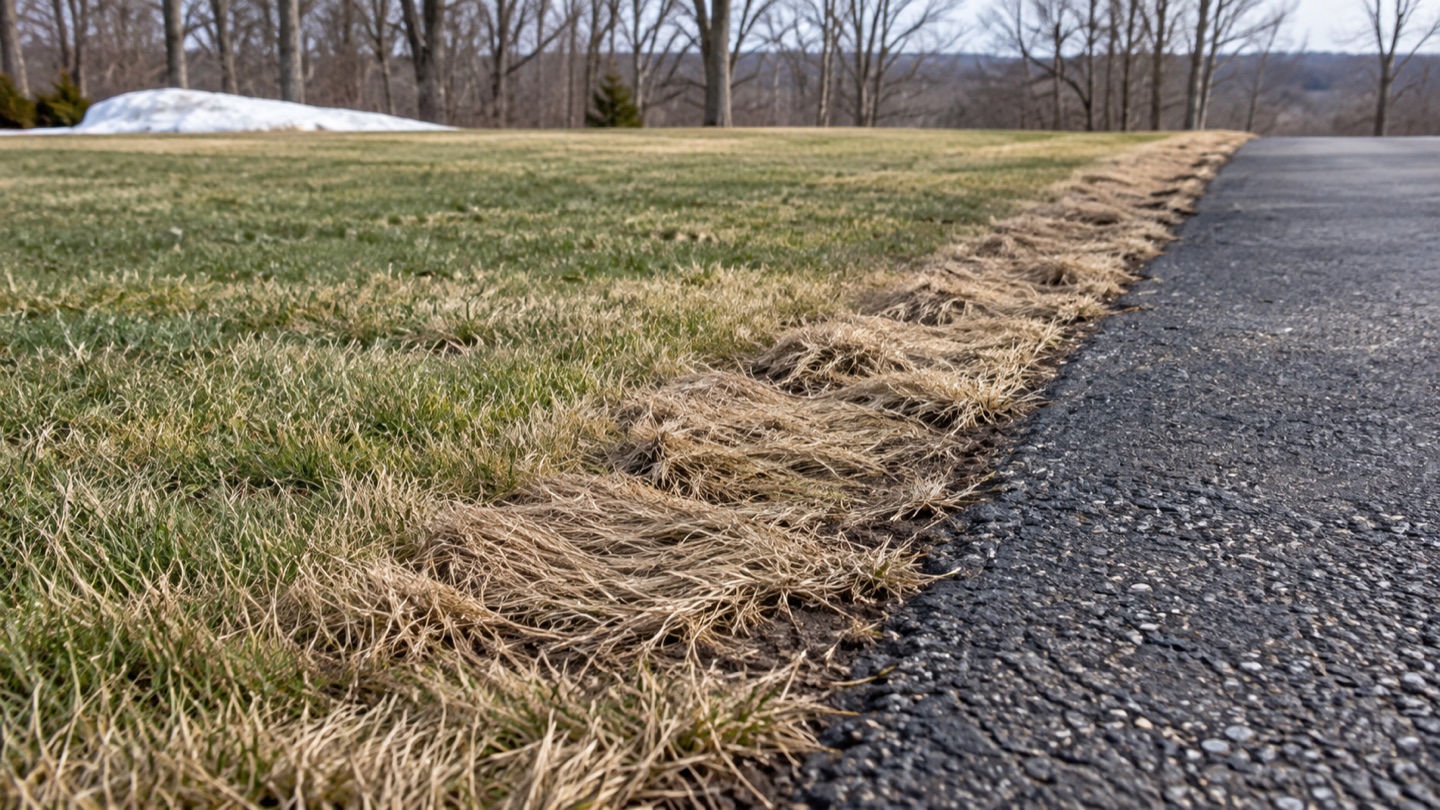
Snow melts, and the lawn does not always look the way it did before the storm. A driveway edge may be flattened and brown while the rest of the yard looks fairly normal. Before buying seed, separate three questions: is the ground ready to work, is the grass recovering, and what would damage the replacement grass again? For Southwest Missouri homeowners, the useful next step is a repair plan for the affected area—not an automatic whole-yard treatment.
1. Wait until the ground can support the work
Do not judge a lawn from its first day out from under snow. Winter injury can affect leaves without killing the entire plant; surviving growing points may produce fresh growth as conditions improve. Conversely, grass with dead crowns will not recover simply because the weather turns warmer. The brown color by itself cannot tell you which situation you have.
Keep equipment off soggy ground. Once the surface is firm enough to walk on without leaving impressions, inspect from the edge and take a few photos. If walking presses water up or leaves deep footprints, postpone the cleanup. A repair visit should not create ruts beside the original problem.
- Photograph the whole affected area and one close view of the grass.
- Record where snow was piled and where deicer was spread.
- Leave a reference photo of nearby healthier turf for comparison.
2. Read the pattern without guessing the diagnosis
A narrow damaged strip beside treated pavement raises a different question than a scraped patch where a plow left exposed soil. Grass under a persistent ice-covered low spot may have faced a different stress again. These are clues to discuss, not proof that every driveway-edge problem is salt injury.
Look for fresh growth within the flattened grass as the surrounding lawn begins growing. Also note missing turf, soil displaced onto the lawn, and water that repeatedly collects in the same place. If the cause remains unclear, ask a local Extension office or a qualified turf professional before selecting a treatment. Bring the photos and the name of any deicing product used; that history is more useful than calling every brown patch winterkill.
3. Gently open matted grass; do not attack it
After the ground firms up, a light hand-raking can lift matted leaves and remove loose debris so air reaches the turf. Stop if the rake is pulling healthy plants out. This is gentle cleanup, not a reason to power-rake, roll or renovate the whole lawn while it is wet.
Gray or pinkish matted patches after snow can suggest snow mold, but visual appearance alone is not a diagnosis. MU Extension notes that most Missouri winters do not make snow molds a major home-lawn concern. University of Minnesota Extension advises gentle spring cleanup and notes that spring fungicide applications do not help the snow-mold damage already present. Persistent or expanding damage deserves an assessment, not an automatic fungicide purchase.
4. Treat the cause at a damaged pavement edge
Deicing salts can interfere with a plant's ability to take up water. Snow-removal equipment can also scrape away turf. Before replacing an edge, check whether the issue was material applied to the pavement, mechanical damage, drainage, or a combination. Spring rain may move salts through suitable soil, but it cannot bring dead plants back to life.
Do not make a fertilizer, lime or soil-additive purchase your first repair step. For repeated failure, ask what testing or site assessment is appropriate and explain the salt history. A bag of seed is not a drainage correction, and repeatedly reseeding the same strip without changing snow handling leaves the original question unanswered. For a quote, identify whether you want turf repair alone or help assessing the recurring edge problem.
5. Choose a small repair now or a stronger fall project
For Missouri cool-season lawns, late summer into early fall is the preferred seeding period. Spring seedings face weed competition and summer stress. A small bare patch that cannot reasonably wait may still need a spring repair plan; a larger thin area deserves a discussion about timing, establishment care and whether sod is a better option.
For a suitable seed repair, remove loose debris, prepare a firm seedbed and make seed-to-soil contact rather than scattering seed over matted grass. Use grass appropriate to the existing lawn and follow its seeding directions. Keep the germination zone moist without puddles or runoff, then adjust watering as roots develop.
Check the lawn's treatment history before buying seed. Many preemergent weed-control products interfere with new grass establishment; follow the exact label's reseeding restrictions. Tell whoever maintains the lawn where the repair is so it does not receive an incompatible treatment.
- Measure the bare area, not the entire property, for the repair estimate.
- Decide who will handle establishment watering before scheduling work.
- Ask how the repaired area will be protected during routine lawn visits.
6. Change the next snow cleanup, not just the grass
Remove snow from pavement before deciding whether deicer is necessary. Use only a product labeled for the surface and conditions, at the label rate. More product is not automatically more effective. Sweep up leftover dry granules from pavement rather than pushing them into the grass.
Compare a snow pusher with a lifting shovel by the work you actually need to do, the weight you can handle, and the blade's suitability for the pavement. The product comparisons below are prevention tools for the next storm—not treatments for damaged turf. If you already have a suitable shovel, there is no reason to replace it merely for this repair.
7. Turn the inspection into a clear next step
Keep one short note with the photos: location, approximate size, suspected exposure, whether new growth is appearing, and what you want done. Update it after the surrounding grass has resumed growth. This makes it easier to distinguish a recovering patch from a bare area that still needs a decision.
For Pebble Creek, an estimate request is most useful when it separates cleanup, lawn repair and a recurring drainage or snow-storage concern. Include a wide photo showing the driveway or sidewalk as well as the close-up. We can discuss the requested scope instead of treating every discolored area as the same job.
The takeaway: protect soft ground, give living grass a chance to recover, investigate persistent damage and choose a realistic establishment window. Chapter 2 closes here; the next chapter looks more closely at soil and nutrition, starting with a practical fertilizer schedule rather than treating fertilizer as a universal repair.
Related Lawn Guide chapters
Useful gear for this topic
Compare two tools for the next snow cleanup
These optional comparisons are for preventing repeat edge damage, not repairing dead grass. Reuse suitable equipment you own. We have not claimed firsthand use of any exact product, and a search result is not a safety recommendation.
As an Amazon Associate, Pebble Creek earns from qualifying purchases. Your price is not increased. How we choose recommendations.
Snow pusher or lifting shovel
Best for: Comparing a pusher for moving snow along pavement with a lifting shovel for places where snow must be lifted, using blade width, weight, handle fit and surface compatibility.
Check the tool instructions and blade suitability for your pavement. Stay within your physical limits; do not scrape turf or use the tool as a lawn-repair treatment. We do not claim firsthand testing of these products.See current Amazon options ↗Ice melt labeled for your paved surface
Best for: Comparing ingredient types and exact label directions for your pavement, expected temperature and application method after snow has been cleared.
Confirm the exact surface restrictions, temperature limits, rate, storage and child/pet precautions on the label. No product is universally harmless to concrete, plants or animals. Apply to permitted pavement, not grass; this does not repair existing turf damage.See current Amazon options ↗Sources and further reading
- University of Minnesota Extension: Damaged lawns—steps for bringing some life back ↗
- University of Minnesota Extension: Spring lawn care ↗
- University of Missouri: Snow molds—many types but little worry for lawns ↗
- University of Minnesota Extension: Effects of deicing salts on landscapes ↗
- MU Extension: Cool-season lawn establishment and renovation ↗
- MU Extension: Managing lawns and turfgrass ↗
This chapter provides general educational information. Site conditions vary, and product labels and equipment manuals control whenever a product or machine is used.