
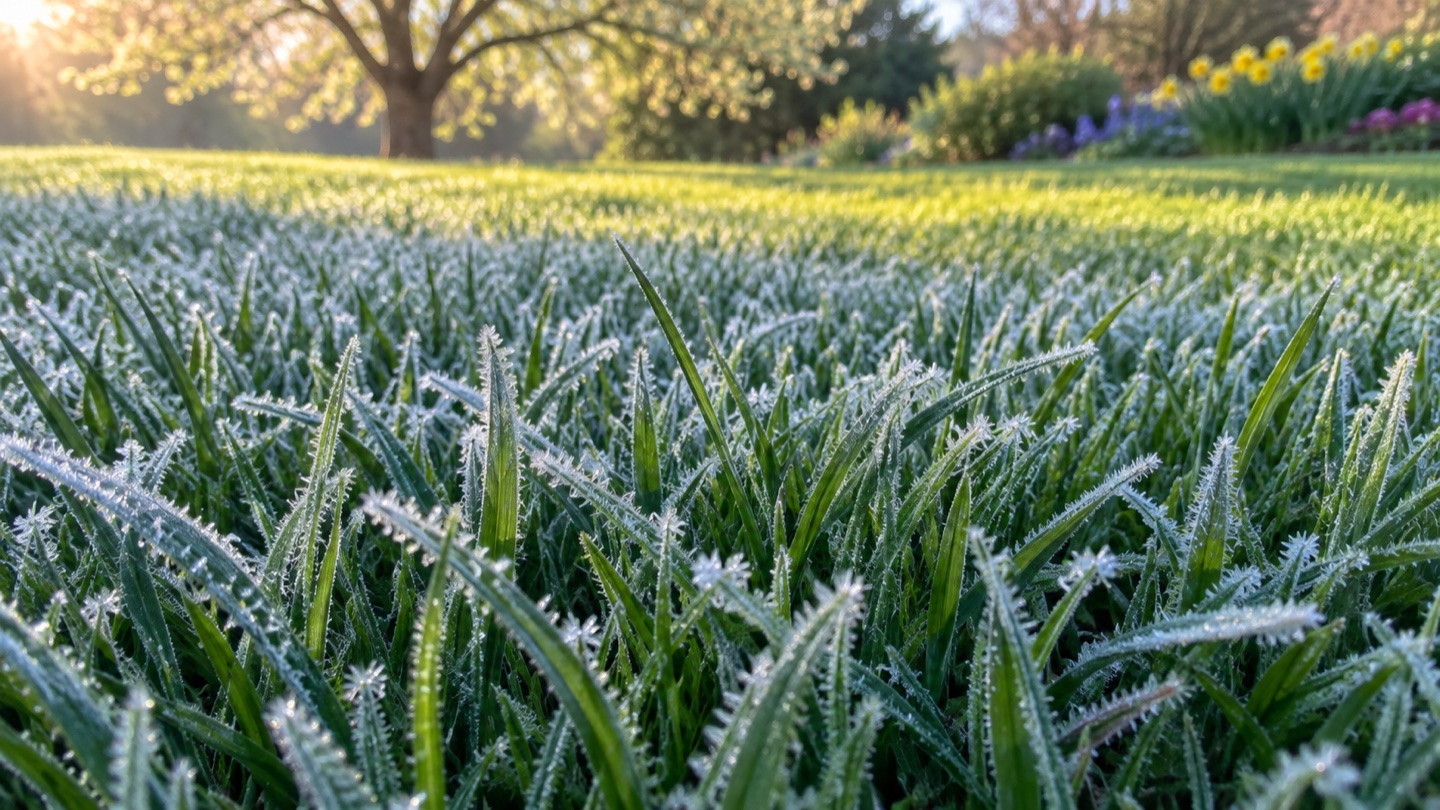
A warm Southwest Missouri week can make the lawn look ready for regular mowing, then a cold morning changes the plan. White frost, pale leaf tips, and a lawn that stops growing are not all the same problem. The useful response is to pause traffic, check the ground, and watch what the grass does next. This guide focuses on established tall fescue, with separate cautions for warm-season grass and newly seeded areas.
1. Separate surface frost from lasting freeze injury
Frost is ice on the grass surface. A freeze describes below-freezing temperatures; the severity and duration of the cold, the grass species, and its condition all matter. K-State turf specialist Jack Fry explains that cool-season leaves can tolerate surface frost, while survival depends especially on the crown—the growing point near the soil surface. Frost on a fescue lawn is not proof that its roots and crowns have died.
That distinction changes the next step. Do not order replacement sod because the lawn looks white at sunrise. Photograph it from the sidewalk, then compare the same area after conditions improve. A picture of frost records the weather; later pictures of continuing discoloration or new growth tell a different part of the story.
2. A sudden cold snap after warmth deserves more attention
Plants gradually gain cold tolerance as winter approaches and lose some of that protection as temperatures warm. K-State's spring-transition guidance explains why an abrupt return to freezing conditions after a warm spell can injure plants that were better prepared for midwinter cold. A recent run of warm afternoons is therefore part of the history worth recording, not evidence that cold weather is finished.
Do not judge every lawn by the neighbor's green fescue. Zoysia and bermudagrass follow a different seasonal growth pattern. Cold weather can interrupt their spring green-up, and a brown area needs to be assessed in the context of its grass type. Identify the lawn before deciding that slower color means permanent damage.
For a service conversation, note the cold morning, the preceding weather, and whether the discoloration appeared across the yard or in one area. Mention recent seeding or sod separately. That is more useful than treating every pale patch as a request for the same fertilizer.
3. Keep people and equipment off frosted grass
The immediate precaution is simple: avoid walking, driving, or mowing on turf while frost remains. K-State describes how traffic on frosted leaves can leave damaged, brown tracks. Use a paved route where possible and check shaded grass as well as sunny spots before beginning work.
Thawed does not necessarily mean ready for equipment. University of Minnesota Extension advises waiting until the ground is firm and avoiding aggressive raking on soft turf. If the surface is still wet enough to rut or smear, leave mowing and cleanup for better conditions. Do not turn a short weather delay into wheel damage that needs repair.
If you are arranging a Pebble Creek visit in Nixa, Ozark, Springfield, or another part of our service area, tell us about persistent shaded frost or soft access points. A wide photo from a safe, paved spot helps show which section is affected. The useful question is whether the property is ready for the work—not simply whether the appointment is on the calendar.
4. Look for recovery before choosing a repair
K-State's turf diagnostic guide lists new leaves turning pale or yellow after a sharp temperature change as a possible spring-frost symptom. It also lists other causes of discolored turf. Timing and appearance can guide an inspection, but a photograph alone does not rule out drainage trouble, disease, chemical injury, or more than one problem together.
When growing weather returns, compare the affected area with a nearby area of the same grass. Look for fresh growth rather than expecting damaged old tips to become green again. Keep dated photos from the same angle and record whether the affected area stays the same size, improves, or expands. There is no honest universal promise that every lawn will recover in a fixed number of days.
If the surrounding grass is growing but a patch remains bare or fails to produce new growth, ask for an assessment before reseeding or spraying. Include a close-up, a whole-yard view, the grass type if known, and any recent treatment dates. Expanding symptoms or repeated damage in the same low spot deserve a closer look instead of another guess.
5. Resume normal care; do not try to erase damage in one visit
Once frost is gone, the grass is dry, the soil is firm, and there is enough growth to cut, resume appropriate mowing. MU Extension's cool-season calendar recommends mowing as needed at the proper height. Do not drop the deck to remove every discolored tip. Keep the one-third rule in mind and let the lawn's actual growth set the pace.
A freeze is not, by itself, a diagnosis of nutrient deficiency. Review the existing treatment plan before adding fertilizer, and do not stack a rescue application on top of work already done. The same caution applies to weed control: identify a need and follow the exact label, especially where seed has recently been planted.
An established lawn and a new seeding also have different watering needs. Check actual moisture and the establishment instructions instead of leaving irrigation on an unchanged schedule. For broad lawn renovation, use our overseeding guide to plan the appropriate season; a spring setback does not automatically call for rebuilding the whole yard.
6. Protect nearby tender plants separately
Your flower bed may need attention even when the established lawn does not need a covering. MU Extension explains that insulating covers conserve warmth around tender plants, but offer limited protection rather than a guarantee against severe cold. Use a frost cloth according to its instructions, and remove or vent it as directed when daytime conditions warm. Do not mistake this bed-care option for a recommendation to blanket the entire lawn.
The optional product comparisons below serve two different purposes. A frost cloth is for suitable nearby bed plants; compare its size, fabric weight, light transmission, and stated protection limits. A probe-style soil thermometer helps record warming trends. It does not measure the overnight air minimum or prove that leaf frost is absent.
Use supplies you already own when they are suitable. These are category comparisons, not claims that Pebble Creek has used or tested each listing. Neither purchase replaces checking the forecast, identifying the plant, and inspecting the actual conditions.
7. The short version for the next cold morning
A weather setback needs a clear sequence: protect the lawn from traffic, wait for workable conditions, record what changes, and get a diagnosis if recovery does not follow. For help deciding between continued mowing, cleanup, or a separate assessment, send Pebble Creek your address and those dated photos so the next visit has a clear purpose.
- Stay off visible frost; do not mow just to keep the usual day.
- Check both sun and shade, then check whether the ground will support equipment.
- Record the grass type, cold spell, recent seeding, and recent treatments.
- Watch for new growth once suitable growing weather returns.
- Do not scalp, fertilize, spray, or reseed automatically because tips changed color.
- Treat tender landscape plants separately from established turf.
Related Lawn Guide chapters
Useful gear for this topic
Compare two optional spring-weather tools
Frost cloth is for suitable tender bed plants, not a blanket treatment for turf. A soil thermometer records soil trends, not overnight air temperatures. Reuse suitable supplies you own; these are comparisons, not firsthand product endorsements.
As an Amazon Associate, Pebble Creek earns from qualifying purchases. Your price is not increased. How we choose recommendations.
Frost cloth for nearby tender bed plants
Best for: Comparing covers for suitable tender plants beside the lawn by size, fabric weight, light transmission, and stated frost-protection limits—not for covering an established lawn.
Read the exact cover instructions and plant requirements. Install, secure, remove or vent as directed; protection is limited and varies with conditions. These are product-category comparisons, not items we claim to have tested.See current Amazon options ↗Probe-style garden soil thermometer
Best for: Recording soil-temperature trends alongside seasonal observations. Compare readable probe length, stated accuracy, and measurement range rather than decorative features.
Follow the manual for probe depth, stabilization time, and calibration. Soil temperature does not tell you the overnight air minimum or whether leaf frost remains; one reading is not permission to mow, seed, or fertilize.See current Amazon options ↗Sources and further reading
- K-State Turf: Ice, Ice Baby — frost, traffic, and crown survival ↗
- K-State Turf: March 2026 spring-transition guidance ↗
- K-State: Turf Diagnostic Guide ↗
- University of Minnesota Extension: Spring lawn care ↗
- MU Extension: Cool-Season Grasses Lawn Maintenance Calendar ↗
- MU Extension: It's time to protect plants from frost ↗
This chapter provides general educational information. Site conditions vary, and product labels and equipment manuals control whenever a product or machine is used.