
For a Nixa or Ozark homeowner, the useful spring question is not simply ‘Does the yard look messy?’ It is ‘What can I clean up now without creating more work or damaging new growth?’ Use this checklist in order: check the ground, remove hazards, clear the lawn, then tackle beds and mowing. You do not have to finish every task on the first warm weekend.
1. Check the ground before bringing out equipment
Walk the lawn, especially shaded corners and areas below downspouts. If shoes sink, water squeezes up, or the surface smears into mud, postpone heavy traffic there. A dry driveway does not mean the lawn can support a mower. MU Extension recommends beginning cleanup once snow is gone and the ground is no longer muddy.
You can still collect accessible litter from firm ground. Split the job into ready areas and wait areas instead of driving across a soggy section to reach everything at once. Recheck after the next rain; a calendar date alone is not a go-ahead.
2. Pick up hazards before raking or mowing
Make one slow pass before starting any powered equipment. Look along fences, beneath trees, and at the driveway edge for loose sticks, toys, wire, stones, and trash. Gather small loose debris you can handle safely; never use a mower to discover what is hidden in a pile.
Keep suspected electrical lines, hanging branches, large storm-damaged limbs, and sharp unknown debris out of the DIY checklist. Keep people away and arrange the appropriate professional help. Ordinary yard gloves are not protection against every hazard.
- Check gates and the route equipment will take before moving bags or tools.
- Note exposed roots, sprinkler heads, and loose edging so they stay out of the mower's path.
- Keep collected material off sidewalks and out of drains; plan composting or an accepted yard-waste destination before making a large pile.
3. Lift heavy leaf mats; leave the grass intact
Leaves packed against a fence or across turf can block light and trap moisture. Once the ground is firm, lift heavy mats with a flexible leaf rake and light pressure. Stop if you are pulling up grass rather than loose debris. Spring cleanup is not a reason to aggressively power-rake the entire yard.
Small amounts of leaves can be mowed into fine pieces when conditions are suitable and the mower can handle them without leaving a blanket. Collect excess instead of repeatedly running over piles. Compost appropriate material or use your local yard-waste option; if plants were treated with a herbicide, follow its label before reusing the debris.
4. Clean beds without cutting everything back
Remove litter and obvious weeds carefully around emerging plants. A tidy lawn does not require stripping every landscape bed bare: leaf litter and standing stems can shelter overwintering insects. MU Extension advises patience with early bed cleanup. Leave a habitat area where practical, and avoid treating one warm afternoon as proof that every plant and insect is ready.
Identify shrubs before pruning. Spring-flowering plants such as lilacs and forsythia already carry flower buds; major trimming before bloom can remove that display. Their routine pruning is generally done just after flowering. Other plants have different timing, so an unidentified shrub gets an identification step, not an automatic haircut.
5. Check existing mulch before buying more
Look beneath the faded surface. Color can fade while plenty of mulch remains, so measure the existing layer before topping up. MU Extension gives a general range of 2–4 inches for most mulches around trees and shrubs; that is total depth, not another 2–4 inches every spring. Keep mulch away from trunks and stems rather than forming a mound against them.
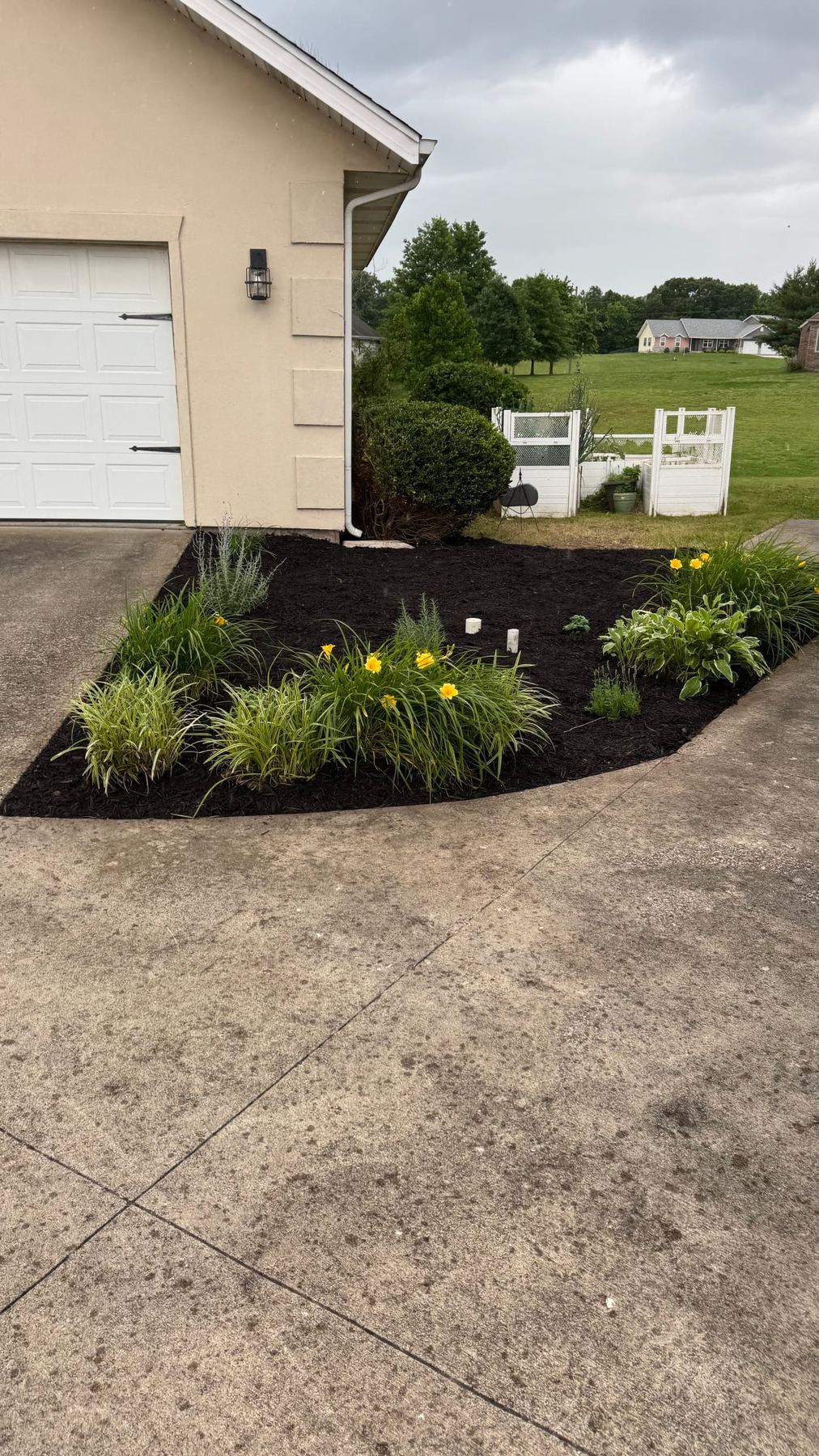
Our original project photo shows a defined bed, visible plants, and a clear walkway. Use those as practical finish checks. Remove loose mulch from pavement and address displaced edging without burying plants. A cleanup and a full bed renovation are different jobs; decide which result you need before ordering material.
6. Make the first mow a normal cut—not a scalp
Inspect the mower and its safety equipment according to the exact model's manual before use. Have blade work or repairs handled correctly, and never reach beneath equipment until it is safely shut down and secured as the manual requires. Cleanup is not complete if hidden debris remains in the mowing area.
For established tall fescue, a practical spring target is about 3–3.5 inches, removing no more than one-third of the leaf height at a time. Begin when the grass is growing and the surface is firm enough; do not cut low to force a brown area to green up. Zoysia and bermudagrass have different seasonal needs, so identify the grass first.
7. Separate the cleanup from the repair plan
Once debris is gone, inspect bare spots, standing water, and thin areas. Photograph or mark the locations for follow-up. Buying seed, lime, and fertilizer for every brown patch can miss the actual problem. Shade, traffic, drainage, soil conditions, and grass type need different solutions; a soil test is useful when fertility or pH is uncertain.
For a cleanup estimate, tell us which areas need attention, whether material must be hauled away, and whether you want mowing, bed work, or both. Mention access limits and any wet or hazardous areas. Pebble Creek's landscaping page shows cleanup and mulch projects, and the service-area page helps you check coverage before requesting an estimate.
- Do now: inspect, remove accessible hazards, and clean ready areas gently.
- Wait when needed: soft ground, frost, unknown pruning timing, or overwintering habitat.
- Plan separately: drainage repairs, major pruning, seeding, and fertilizer decisions.
Related Lawn Guide chapters
Useful gear for this topic
Compare a cleanup rake and well-fitting gloves
These are tool-category comparisons, not claims that Pebble Creek has tested every listing. Choose for your working space and the material you will handle; reuse suitable tools you already own.
As an Amazon Associate, Pebble Creek earns from qualifying purchases. Your price is not increased. How we choose recommendations.
Professional-style leaf and landscape rake
Best for: A broad flexible fan rake for open lawn leaves, or a narrower head for working carefully between established bed plants.
Check tine flexibility, handle length, and weight. A rigid grading or dethatching rake is not the same tool; use light pressure and wait on soft turf.See current Amazon options ↗Durable yard-work gloves
Best for: A snug, grippy pair for gathering ordinary loose debris; compare flexible gloves for dexterity with reinforced palms for abrasion resistance.
Check sizing and the manufacturer's protection ratings. Puncture-resistant does not mean puncture-proof, and yard gloves are not chemical or powered-cutting protection. Leave unknown sharp or hazardous material to appropriate help.See current Amazon options ↗Sources and further reading
- MU Extension: Getting Ready to Grow ↗
- MU Extension: Mow or Compost Leaves for Best Results ↗
- MU Extension: Pollinators—Patience Pays Off ↗
- MU Extension: Pruning Ornamental Shrubs ↗
- MU Extension: Grass Clippings, Compost and Mulch ↗
- MU Extension: Soil Testing for Lawns ↗
- MU Extension: Cool-Season Grasses Lawn Maintenance Calendar ↗
This chapter provides general educational information. Site conditions vary, and product labels and equipment manuals control whenever a product or machine is used.