
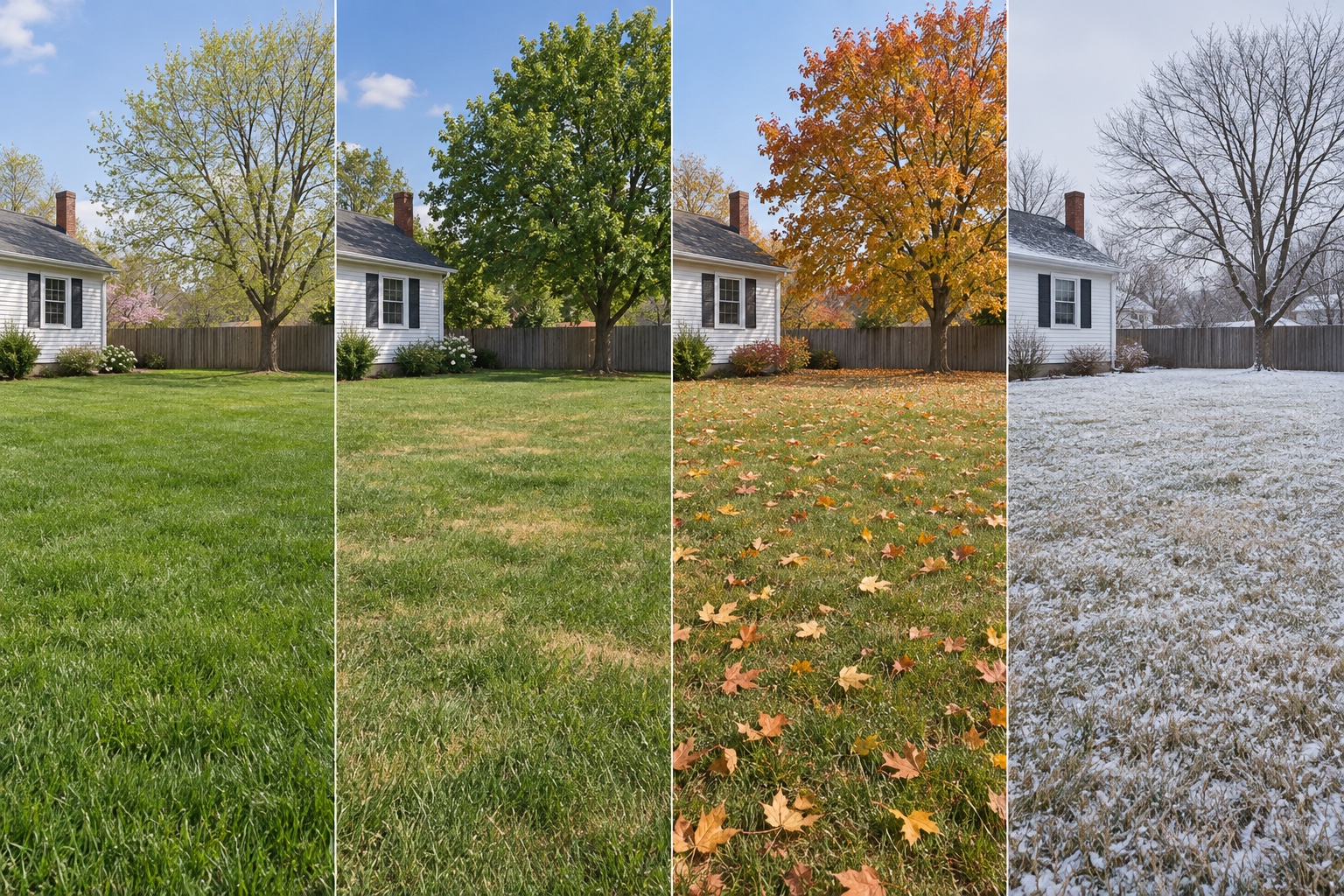
When should you raise the mower? When does the lawn need more water? Here is the year at a glance for established tall fescue in Southwest Missouri. Months are approximate: let growth, rainfall, and soil conditions move the timing. New seed and sod need different watering, and this is not a zoysia or bermudagrass calendar.
The short version
Spring: mow more often. Summer: mow higher and water according to need. Fall: help the lawn recover, seed thin areas, and make fertilizer count. Winter: protect the grass and pause work it does not need.
- Mowing height: a practical tall fescue target is 3–3.5 inches in spring and fall, moving toward 3.5–4 inches in summer heat or shade.
- Water: actively growing Missouri lawns may need about 1–1.5 inches total per week in summer, including rain—not that much irrigation on top of rain.
- Timing: water early in the morning. Do not mow wet, frosty, or dormant grass.
January
leave resting turf alone
- Mow: usually unnecessary when there is no growth; avoid traffic on frozen or frost-covered grass.
- Water: no routine summer-style schedule. Never irrigate frozen ground.
- Main task: remove heavy debris when conditions allow, without driving equipment over soft turf.
February
get ready, without forcing growth
- Mow: wait for actual growth, not the first warm afternoon.
- Main task: inspect and sharpen blades, using the mower manual for safe maintenance.
- Soil: arrange a test if fertility or pH is unknown; lime is not an automatic spring treatment.
March
restart mowing and plan weed prevention
- Mow: begin as needed around 3–3.5 inches once turf is growing and the ground supports equipment.
- Water: skip irrigation when spring rain is keeping the root zone moist.
- Weeds: plan crabgrass prevention before germination. Follow local timing and the label; some preventers also block grass seed.
April
mow more often, not shorter
- Mow: weekly may not be enough during a growth surge. Remove no more than one-third per cut.
- Water: supplement only during a dry spell; do not leave the irrigation timer running through rainy weeks.
- Feed: light spring feeding may fit some programs, but avoid a heavy nitrogen push.
May
start raising the cut as heat arrives
- Mow: move toward 3.5–4 inches as hot, dry weather develops; do not wait until the lawn is stressed.
- Water: check sunny areas as rain becomes less reliable. Increase irrigation only when the soil is drying.
- Avoid: routine nitrogen feeding after May 1 in MU's cool-season program, particularly fast-release nitrogen.
June
keep more leaf and water deeply
- Mow: keep the higher summer setting; maintain frequency only while growth justifies it.
- Water: use the summer rainfall-plus-irrigation range above as a starting point, checking the soil rather than chasing a fixed amount.
- Method: soak the root zone instead of sprinkling lightly every day. Pause and resume if water runs off.
July
highest cut, fewer unnecessary passes
- Mow: stay near 3.5–4 inches; stretch the interval or stop when heat and drought stop growth.
- Water: hot, windy, rainless weeks can require more supplemental water than spring. Do not add water to already-wet soil.
- Dormancy: a brown lawn is not automatically dead, but extended drought can kill turf. Survival watering differs from keeping it green; follow local restrictions.
August
maintain summer care; prepare to seed
- Mow: keep the summer height until heat eases and growth returns.
- Repair: identify thin or compacted areas for fall work rather than fertilizing stressed grass.
- Seed: MU's preferred cool-season window is roughly August 25–October 10, with early September generally stronger than late planting.
September
recovery, aeration, and overseeding
- Mow: resume a growth-based schedule. Gradually return toward 3–3.5 inches if conditions suit; never scalp to get there.
- Improve: overseed thin turf and core-aerate where compaction warrants it. Seed needs contact with soil.
- Water and feed: keep new seed's surface moist with light, frequent watering; established turf follows its normal moisture checks. September is a key fertilizer month.
October
ease watering as demand drops
- Mow: continue while grass grows; cooler weather does not mean mowing is finished.
- Water: reduce irrigation as cooler conditions and rain lower demand, while protecting developing seedlings from drying.
- Feed: another fall application depends on the year's program and product label—not simply the month changing.
November
clear leaves and finish at normal height
- Mow: make the last cut when growth calls for it, at the normal fall height—not a winter scalp.
- Leaves: mulch light amounts finely; collect excess that blankets the lawn or stays in clumps.
- Water: avoid entering winter with drought-dry soil, but do not leave it waterlogged.
December
stop mowing when growth stops
- Mow: pause once the grass is no longer growing; do not cut merely to keep a weekly appointment.
- Protect: keep equipment off soft ground and avoid walking repeatedly over frosty turf.
- Store: winterize irrigation and prepare the mower for storage according to the equipment instructions.
Adjust the calendar to the lawn in front of you
A shaded side yard may need less irrigation than a sunny slope. A wet week can cancel watering; an actively growing lawn can need another cut sooner. Use the monthly priorities to choose the next task, not to override those conditions. For mowing technique, start with the related articles below. Later seasonal chapters will cover watering, dormancy, overseeding, and fall care in more detail.
Related Lawn Guide chapters
Useful gear for this topic
Two optional tools for a more useful lawn calendar
A planner records what happened; a soil thermometer adds a measurable observation. These are category comparisons, not claims that Pebble Creek used or tested the products in the search results. Neither is required to start keeping a useful lawn record.
As an Amazon Associate, Pebble Creek earns from qualifying purchases. Your price is not increased. How we choose recommendations.
Lawn-care journal or undated garden planner
Best for: Keeping actual mowing dates, rainfall notes, soil-test results, and seasonal tasks together. Compare an undated layout with a calendar layout based on how you record work.
Check the sample pages and writing space before choosing. A plain notebook or phone note also works; generic printed treatment dates never override product-label or equipment-manual instructions.See current Amazon options ↗Probe-style garden soil thermometer
Best for: Recording soil-temperature trends alongside seasonal observations. Compare readable probe length, stated accuracy, and measurement range rather than decorative features.
Read the manual for insertion depth, stabilization time, and calibration. A thermometer does not measure soil nutrients or moisture, and one reading is not a fertilizer or seeding prescription.See current Amazon options ↗Sources and further reading
- MU Extension: Cool-Season Grasses Lawn Maintenance Calendar ↗
- MU Extension: Cool-Season Grasses—Lawn Establishment and Renovation ↗
- MU Extension: Home Lawn Watering Guide ↗
- University of Maryland Extension: Maintaining an Established Lawn ↗
- MU Extension: Soil Testing for Lawns ↗
This chapter provides general educational information. Site conditions vary, and product labels and equipment manuals control whenever a product or machine is used.