
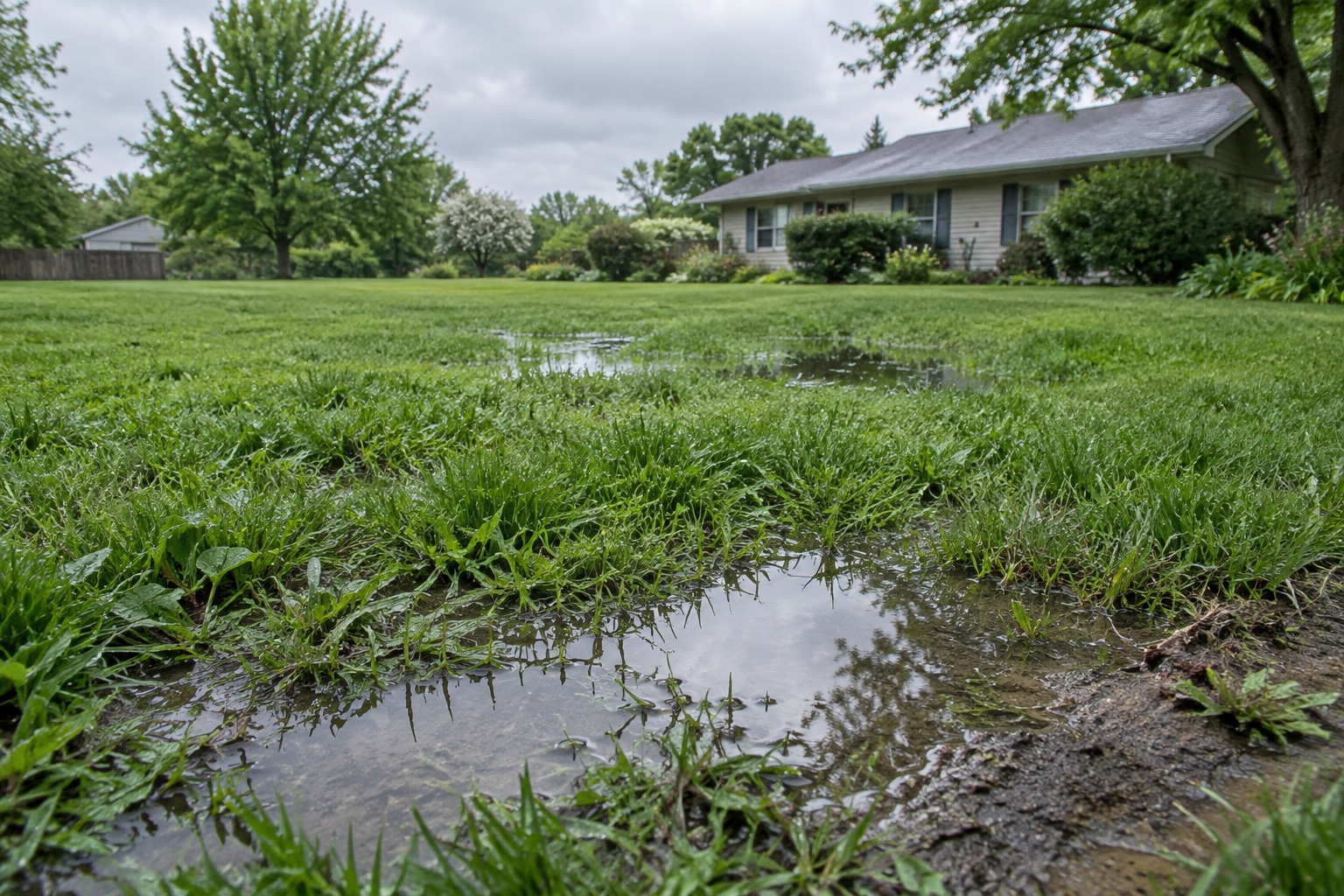
A light layer of morning dew and a lawn soaked by repeated rain are not the same situation. Grass can sometimes be cut while slightly damp, but saturated soil, slick slopes, standing water, and heavy clumping are clear reasons to wait. In Southwest Missouri, the best decision often comes from checking both the grass leaves and the ground beneath them—not simply looking at the calendar.
The short answer: dry is better
Whenever possible, mow after the grass leaves and soil surface have had time to dry. Wet grass is harder to cut evenly, can collect inside a rotary mower, and is more likely to form heavy clumps instead of filtering back into the turf. Iowa State University Extension also notes that dry mowing reduces the risk of slipping around the mower.
That does not mean every trace of dew requires a full-day delay. The real question is whether the mower can travel safely and leave a clean result without rutting soil, sliding, tearing turf, or dropping mats of wet clippings. If that answer is uncertain, postpone the cut.
Wet grass and wet soil create different problems
Wet leaves can bend instead of standing upright for the blade, stick beneath the deck, and discharge unevenly. The result may be missed blades, an uneven appearance, reduced airflow, and clumps that need a second cleanup after they dry.
Saturated soil is the bigger property-care concern. Even when the leaf surface looks mowable, shoes or mower tires may sink into soft ground. Tire pressure and repeated turns can leave tracks, scuff thin turf, or create ruts that remain visible after the grass recovers. Low areas, drainage paths, shaded sections, and recently disturbed soil often stay soft longer than the rest of the lawn.
Use a practical go-or-wait check
Walk the property before unloading or starting the mower. Check several areas rather than judging only the sunny front lawn. A backyard, side gate, swale, or north-facing slope may still be unsafe after the open turf has begun to dry.
- Wait if your shoes sink, slide, or leave deep impressions in the soil.
- Wait if mower tires would cross standing water, mud, a wet bank, or a soft drainage route.
- Wait if a handful of cut grass sticks together in a dense wet wad instead of separating easily.
- Wait on slopes whenever moisture reduces traction or makes the operating direction uncertain.
- Proceed only when the route is firm, visibility is good, and the mower can operate within its manufacturer's instructions.
Why clumps should not be left behind
MU Extension recommends leaving normal clippings on the lawn, but identifies wet or excessively tall grass as exceptions because the clippings can mat together and fail to distribute evenly. Heavy mats can shade the living turf beneath them and leave an untidy finish.
If mowing cannot be delayed and clumps form, do not keep making passes that grind tires into soft soil. Let the material dry when practical, then scatter light clumps or collect heavy mats. If the lawn has become too tall during a rainy stretch, return it to the target height in stages and continue following the one-third rule rather than forcing one aggressive cut.
Safety overrules the schedule
Wet turf is especially risky on slopes, near ponds and drainage channels, along roadside edges, and anywhere a mower could lose traction. MU Extension specifically advises avoiding wet grass on slopes and muddy or wet ground near waterways. The equipment manual, its slope limits, and the operator's judgment always control the decision.
Never reach beneath a mower to clear packed grass while it can start or while a blade can move. Shut the equipment down, isolate its power source, allow moving and hot parts to stop, and follow the manufacturer's cleaning and service instructions. If the property cannot be mowed safely, the correct professional decision is to reschedule it.
Southwest Missouri weather requires flexibility
Spring growth can accelerate during a rainy week while clay-heavy or compacted areas remain soft. That creates a real scheduling tradeoff: waiting allows the ground to firm up, but waiting too long may produce excessive growth. The answer is not to rush onto saturated turf. It is to monitor conditions, mow the driest safe window, and use staged cuts when growth has passed the one-third guideline.
A simple rain gauge can document how much water reached the property, but rainfall totals alone do not decide whether a lawn is ready. Shade, drainage, soil texture, irrigation, slope, and recent traffic all change drying time. The shoe-print and tire-mark test on the actual route remains more useful than a guess from the driveway.
The Pebble Creek wet-weather standard
We want every visit to leave a finished property, not evidence that the schedule mattered more than the lawn. When conditions allow safe travel and a clean cut, we mow with the appropriate height, overlap, and clipping plan. When the ground is too soft or traction is questionable, we wait and communicate the delay.
That flexibility protects the turf, the property, the operator, and the quality of the final result. A mowing day can move. Ruts, damaged edges, and unsafe decisions are much harder to undo.
Related Lawn Guide chapters
Useful gear for this topic
Check wet conditions before the mower enters
These tools can help compare rainfall and soft areas, but no gadget replaces walking the property and postponing the cut when turf, soil, or slopes are unsafe.
As an Amazon Associate, Pebble Creek earns from qualifying purchases. Your price is not increased. How we choose recommendations.
Simple outdoor rain gauge
Best for: Tracking rainfall before deciding whether the lawn needs additional irrigation.
See current Amazon options ↗Simple soil-moisture meter
Best for: Comparing how wet different parts of a lawn are before putting mower traffic onto a soft area.
Use the reading as one clue, not a safety guarantee; also walk the property and check whether shoes or tires leave impressions.See current Amazon options ↗Waterproof, slip-resistant work boots
Best for: Keeping better footing and drier feet while inspecting damp turf before deciding whether conditions are safe to mow.
Boots do not make a wet slope or saturated lawn safe for mowing; postpone the work whenever traction or ground stability is questionable.See current Amazon options ↗Sources and further reading
- MU Extension: Don't Bag It Lawn Care ↗
- MU Extension: Make Your Mowing Habits a Cut Above ↗
- Iowa State University Extension: Proper Mowing of the Home Lawn ↗
- University of Minnesota Extension: June Garden Checklist ↗
This chapter provides general educational information. Site conditions vary, and product labels and equipment manuals control whenever a product or machine is used.