
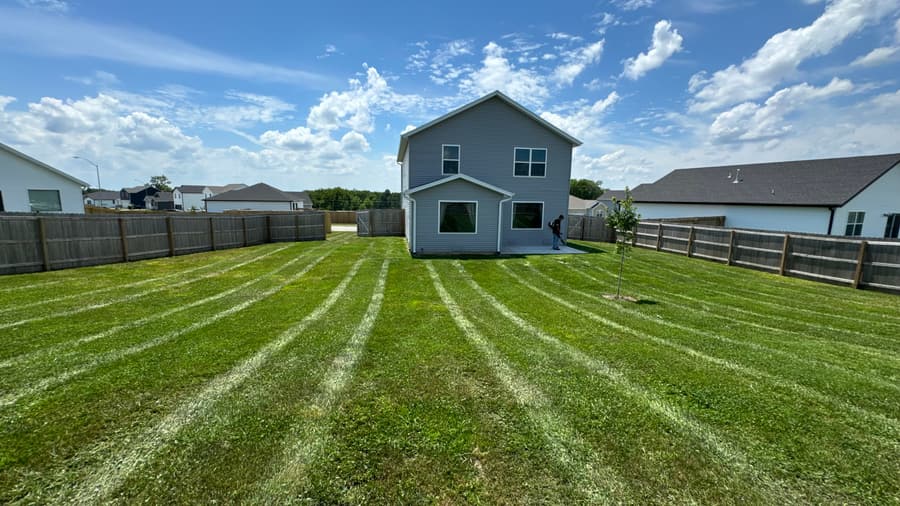
Changing direction is one of the simplest habits that separates routine cutting from thoughtful lawn care. A new pattern does more than change the way the stripes look: it spreads mower traffic across the property, discourages grass from leaning the same way, and gives the operator a fresh view of low spots, obstacles, and edges. The goal is not a complicated design every week. It is a safe, repeatable rotation that fits the lawn.
What repeated mowing lines can do
When the mower follows the identical route every visit, its tires repeatedly load the same narrow strips of soil and turf. On firm, healthy ground this may first appear only as a persistent track. On wet soil, thin turf, tight turns, or heavily traveled entry points, repeated traffic can contribute to rutting, compaction, scuffing, and a visibly worn path.
Grass can also begin to lean in the direction it is regularly pushed. University of Minnesota Extension recommends changing mowing direction frequently to encourage upright shoot growth and help prevent continuous scalping and soil compaction. MU Extension likewise recommends changing the mowing pattern regularly rather than burning one pattern into the lawn.
Direction affects more than the stripe
The light-and-dark effect described in our guide to lawn striping comes from grass blades bending and reflecting light differently. Rotating the pattern helps the turf stand more evenly instead of being trained in one direction. It can also expose small skips or uneven spots that disappear when every visit is viewed from the same angle.
A changed route does not correct a dull blade, an unlevel deck, excessive cutting height removal, or saturated soil. Those fundamentals still control cut quality. Direction rotation is a supporting practice that works best after mower setup, mowing height, and timing are already right.
Use a simple three-pattern rotation
Most open lawns do not need an elaborate plan. Start with three practical directions and move to the next one each visit: north-south, east-west, and one safe diagonal. On a fourth visit, use the opposite diagonal if the property allows it, or return to the first pattern with a slightly different entry line.
Record the previous direction in a route note, calendar, or mowing log. For a homeowner, a quick note such as ‘north-south this week’ is enough. For a crew, the property record should also identify the normal entry point, soft ground, gates, utilities, pet areas, and any location where the safest travel direction should not change.
- Visit 1: mow north-south where the property safely allows it.
- Visit 2: mow east-west and shift the first pass away from the previous tire line.
- Visit 3: use a safe diagonal that does not force risky turns or cross-slope travel.
- Visit 4: use the opposite diagonal or restart the rotation with adjusted entry and turn points.
Move the entry point and turn zone too
Changing only the center lines is incomplete if the mower still enters through the same narrow spot and pivots in the same corner every time. Entry gates, curb openings, trailer access, and perimeter turn zones often receive more traffic than the middle of the lawn. When space permits, offset the entry route and make turns in a different part of the perimeter pass.
Use wide, controlled turns instead of stopping one drive tire and twisting on the turf. That is especially important on tall fescue during summer stress, after rain, and on newly established or thin areas. If the only safe entrance is fixed, protect that route by waiting for suitable ground conditions and minimizing unnecessary passes rather than forcing a different entrance.
Let safety overrule the rotation
A pattern schedule is never permission to operate across a slope, ditch, drop-off, wet bank, roadside edge, or drainage swale in an unsafe direction. The mower manufacturer’s operating instructions, the equipment’s slope limits, traction, surface conditions, and the operator’s judgment control the route. Sometimes the safest direction should remain the same in one part of the property even while the open sections rotate.
Walk unfamiliar ground before mowing. Mark hidden objects and soft areas, then remove all temporary flags before the mower enters. Watch for changes caused by rain, construction, utility work, pets, children’s toys, low branches, washouts, or parked vehicles. A property can require a different plan this week than it did on the last visit.
Adjust the plan for Southwest Missouri conditions
Southwest Missouri lawns can move quickly from soft spring soil to heat-stressed summer turf. During active spring growth, the main challenge may be avoiding saturated ground and keeping up with the one-third rule. During summer stress, limiting traffic, raising the cutting height when appropriate, and avoiding tight turns on thin turf can matter more than producing a sharp pattern.
Shade, clay soil, irrigation coverage, construction fill, and drainage can vary across one yard. If a repeated track stays visible long after mowing, do not simply cover it with a new stripe. Check soil moisture, tire pressure, deck level, traffic concentration, and turf density. A persistent rut or compacted route may need correction beyond a pattern change.
The Pebble Creek direction standard
We rotate mowing directions when the property and conditions allow, but we do not chase a pattern at the expense of safety or turf health. The route should distribute traffic, produce an even cut, protect edges and turns, and finish with hard surfaces cleared of clippings.
The best rotation is the one a homeowner or crew can follow consistently. Keep it simple, note the last direction, adapt to current conditions, and let the lawn’s layout decide what is practical. Over a season, those small choices help create a more even and professionally maintained finish.
Related Lawn Guide chapters
Useful gear for this topic
Plan and remember a safer mowing rotation
These simple planning tools help identify hazards and keep a property-specific pattern rotation consistent without treating a visual pattern as more important than safe operation.
As an Amazon Associate, Pebble Creek earns from qualifying purchases. Your price is not increased. How we choose recommendations.
Reusable property-marking flags
Best for: Temporarily marking hidden obstacles, soft areas, sprinkler heads, and a changed entry point while planning a safer mowing route.
Remove every flag before mowing and keep flags away from children, pets, roadways, and utility-marking locations.See current Amazon options ↗Weather-resistant mowing log notebook
Best for: Recording the last mowing direction, wet or soft areas, obstacles, and the next safe pattern for a property.
See current Amazon options ↗Sources and further reading
- MU Extension: Start Your Engines—Mowing Season Begins ↗
- University of Minnesota Extension: Mowing Practices for Healthy Lawns ↗
- MU Extension: Cool-Season Grasses—Lawn Maintenance Calendar ↗
This chapter provides general educational information. Site conditions vary, and product labels and equipment manuals control whenever a product or machine is used.