
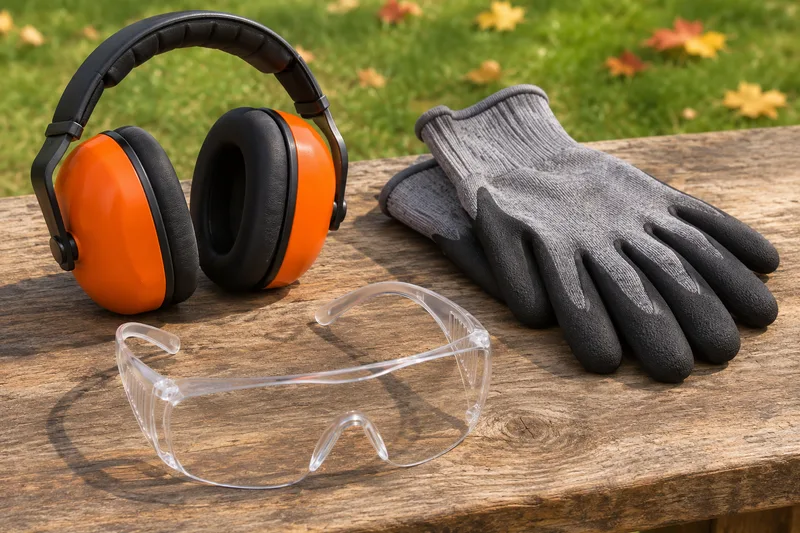
For routine mowing, start with the machine manual's eye and hearing protection, sturdy footwear and clothing instructions. For yard cleanup, add hand protection suited to the debris and reassess the equipment whenever the task changes. The useful question is what you will encounter today: flying grit, sustained noise, rough branches, slippery footing or something requiring specialist help. Use the checklist below to build a kit around those exposures.
1. Match protection to the actual task
Before putting on gear, walk the work area and decide which tools you will use. Pick up loose objects that a mower could throw, check guards and keep people and pets outside the operating area specified by the manual. Scag's safety guidance emphasizes debris removal, working safety devices, protective clothing and hearing protection. Read the instructions for your exact machine before starting.
At Pebble Creek, our Southwest Missouri service planning covers both recurring lawn care and property cleanup. A homeowner's Saturday can include the same change of tasks: mow, trim around a bed, then gather leaves and limbs. Treat each change as a prompt to check the work area and gear again. Write down the equipment you actually plan to use so a forgotten pair of glasses does not become an improvised decision at the shed.
| Task | Protection to check | Stop and reassess when |
|---|---|---|
| Mowing | Manual-specified eye and hearing protection, long pants and suitable footwear. | A guard is damaged, someone enters the work area or debris remains in the cutting path. |
| Trimming or edging | Eye protection with side coverage, hearing protection and the manual's clothing and face-protection instructions. | The attachment or surface changes, visibility is poor or thrown debris cannot be controlled. |
| Raking and gathering branches | Gloves matched to the material, secure footwear and eye protection where debris or branches threaten the eyes. | You find hidden sharp waste, unstable limbs or material you cannot identify. |
| Blowing leaves | Eye and hearing protection, plus the manual's dust precautions and an assessment of what is being disturbed. | Dust obscures your view or the material could contain hazardous contamination. |
| Chemicals, chainsaws or work near traffic | A separate task assessment, applicable labels, training and specialized protection. | You lack the instructions, suitable equipment or competence for that task. |
2. Check eye coverage, markings and visibility
Choose safety eyewear documented for the hazard and check the manufacturer's markings and instructions. For flying particles, side coverage matters. OSHA's eye-protection selection chart identifies impact-rated spectacles and goggles, and describes a face shield worn over protective spectacles or goggles. The plus sign is part of impact-rating markings, including Z87+ on applicable nonprescription frames. Confirm the complete product specification instead of relying on the word 'safety' in a shopping title.
If you wear prescription glasses, compare prescription safety eyewear or protective eyewear designed to fit over them. Check that both pairs stay aligned when you look down, turn your head and put on hearing protection. Ask the eyewear supplier for help if the combination shifts or leaves an unsuitable fit.
Choose a lens tint that lets you see the actual work area, including shaded corners. Inspect for cracks, loose parts and scratches that interfere with vision. Clean with the method approved by the maker. If lenses fog during work, stop the equipment in a safe position and resolve the fit or ventilation problem before continuing. Keep the protection in place while exposure continues.
3. Fit hearing protection with the rest of your gear
Follow the machine manual and select hearing protection suited to the noise exposure. NIOSH explains that the package noise reduction rating, or NRR, often differs from the protection an individual actually receives. Fit testing gives a better estimate. Avoid subtracting the printed NRR from a guessed mower noise level and treating that result as your personal exposure.
Try the earmuffs with the eyewear and headwear you will actually use. NIDCD explains that glasses arms, hair and hats can create gaps at the cushions. Cups should cover the ears and seal as directed. For earplugs, follow the maker's insertion instructions and practice until the fit is comfortable and consistent. Change the type or size when you cannot achieve a proper fit.
Plan how to communicate before starting noisy equipment. Stop the machine and move to a suitable quiet position when a conversation needs your attention. NIOSH says active noise-canceling headphones or earbuds should be considered hearing protection only when labeled with an NRR. Check the manufacturer's intended use, fit and limitations for any electronic headset you compare.
4. Choose gloves, footwear and clothing for the material
For handling ordinary yard debris, compare well-fitting gloves that let you hold the tool securely. Inspect the fingertips, palms and seams before use. Match any claimed cut or puncture resistance to the manufacturer's documented rating and the material being handled. Use tools or qualified help for sharp or unidentified waste rather than testing a glove against it.
Choose footwear with secure fit, traction and the protection specified for the work. Look for damaged uppers, loose soles and worn tread. Wet leaves can conceal a slick step or uneven edge. Check that surface before carrying a load, and use a route you can see clearly. A local cleanup plan may need to change after rain even when the gloves and boots are ready.
Use clothing that permits movement while keeping loose fabric, jewelry and hair away from moving parts. Recheck cuffs and drawstrings when adding a cold-weather layer. For warm conditions, plan water, breaks and sun protection as part of the job. The CCOHS landscaping guidance covers clothing, glove grip and footing, while the University of Georgia checklist connects equipment training with weather and site conditions.
5. Recognize work that needs a different protection plan
Pause before blowing or disturbing unfamiliar dusty material. Identify what is present and choose a method that controls exposure. NIOSH describes different respirator types and their uses, with selection depending on the hazard. A generic dust-mask purchase cannot establish the right equipment for an unknown substance. Get qualified guidance when the material or required protection is uncertain.
For pesticide work, read the current product label's requirements for mixing, application and cleanup. The University of Georgia training checklist specifically has workers locate those PPE instructions. Ordinary cleanup gloves may differ from the specified chemical-resistant material. Keep the product label available and follow its handling and cleaning directions.
Chainsaw work, overhead limbs, roadside work and unstable debris need their own assessment, equipment and training. If your cleanup reaches one of those tasks, stop and arrange the appropriate help. Before inspecting or clearing powered equipment, follow its shutdown and power-isolation procedure. Our mower-deck cleaning guide explains how to find that procedure for the machine being serviced.
6. Use a short gear check before each job
Keep a written check with the equipment so it can be used again when the job or operator changes. Make the entries specific: record the model of the glasses, the hearing protector and the tool. A note such as 'earmuff cushion split—replace before mowing' gives the next person a clear action. Store clean protection where it will be easy to find and protected from damage.
OSHA's PPE overview stresses fit, care, limitations and instruction. Use the manufacturer's cleaning and replacement directions for each item, and remove damaged gear from use. If you supervise workers, include the applicable workplace assessment and training requirements in your process.
The comparisons below cover two parts of the kit: protective eyewear and hearing protection. Compare documented ratings, fit, compatibility, replacement parts and instructions for the exact item offered. Pebble Creek has no documented firsthand test of the products in these search results. Take your existing glasses and headwear into account before choosing a replacement.
If you prefer to have the lawn work handled, review our lawn-care services and current service area, then request an estimate. You can also use the spring maintenance checklist to prepare the machine alongside your protective equipment.
- OSHA personal protective equipment overview ↗
- Spring mower maintenance checklist ↗
- Pebble Creek lawn care ↗
- Current service area ↗
- Request an estimate ↗
- Job and equipment — list today's tasks and each tool or attachment.
- Exposure — note flying debris, noise, hand hazards, footing and any unfamiliar material.
- Required gear — copy the relevant manual or label instructions and identify the products you have.
- Fit together — check vision, movement, grip and the hearing-protector seal with all gear worn.
- Condition — record damage, cleaning needed and replacement items before work begins.
- Decision — begin only after the checks pass, or record the task that needs a different method or qualified help.
Related Lawn Guide chapters
Useful gear for this topic
Compare eye and hearing protection for your kit
Start with the equipment manual, then compare documented ratings and how the gear fits together. These two comparisons cover eye and hearing protection for the tasks described above.
As an Amazon Associate, Pebble Creek earns from qualifying purchases. Your price is not increased. How we choose recommendations.
ANSI-rated safety glasses
Best for: Comparing documented impact protection, side coverage, prescription compatibility and clear or tinted lenses appropriate to the work area.
Verify the exact model's ANSI/ISEA Z87.1 documentation, required impact markings and fitting instructions. Check coverage and compatibility with hearing protection. A face shield used for impact protection goes over appropriate protective spectacles or goggles. Search results may include other eyewear. No firsthand testing or guaranteed fit is claimed.See current Amazon options ↗Hearing protection for outdoor power equipment
Best for: Comparing the manufacturer's NRR, fitting instructions, comfort, cushion replacement and compatibility with the eyewear and headwear you use.
Select for the actual noise exposure and equipment instructions. The printed NRR does not establish your individual protection. Check the seal with your glasses and headwear, and seek fitting help when needed. Ordinary audio headphones may lack a hearing-protection rating. Search results can include unrelated headsets. No firsthand testing or universal protection level is claimed.See current Amazon options ↗Sources and further reading
- Scag operation and safety guidance ↗
- OSHA eye and face protection selection guide ↗
- NIOSH hearing protection selection and fit ↗
- NIDCD hearing protector fitting guidance ↗
- CCOHS landscaping safety guidance ↗
- University of Georgia landscape safety checklists ↗
- NIOSH respirator types and use ↗
- OSHA personal protective equipment overview ↗
This chapter provides general educational information. Site conditions vary, and product labels and equipment manuals control whenever a product or machine is used.