
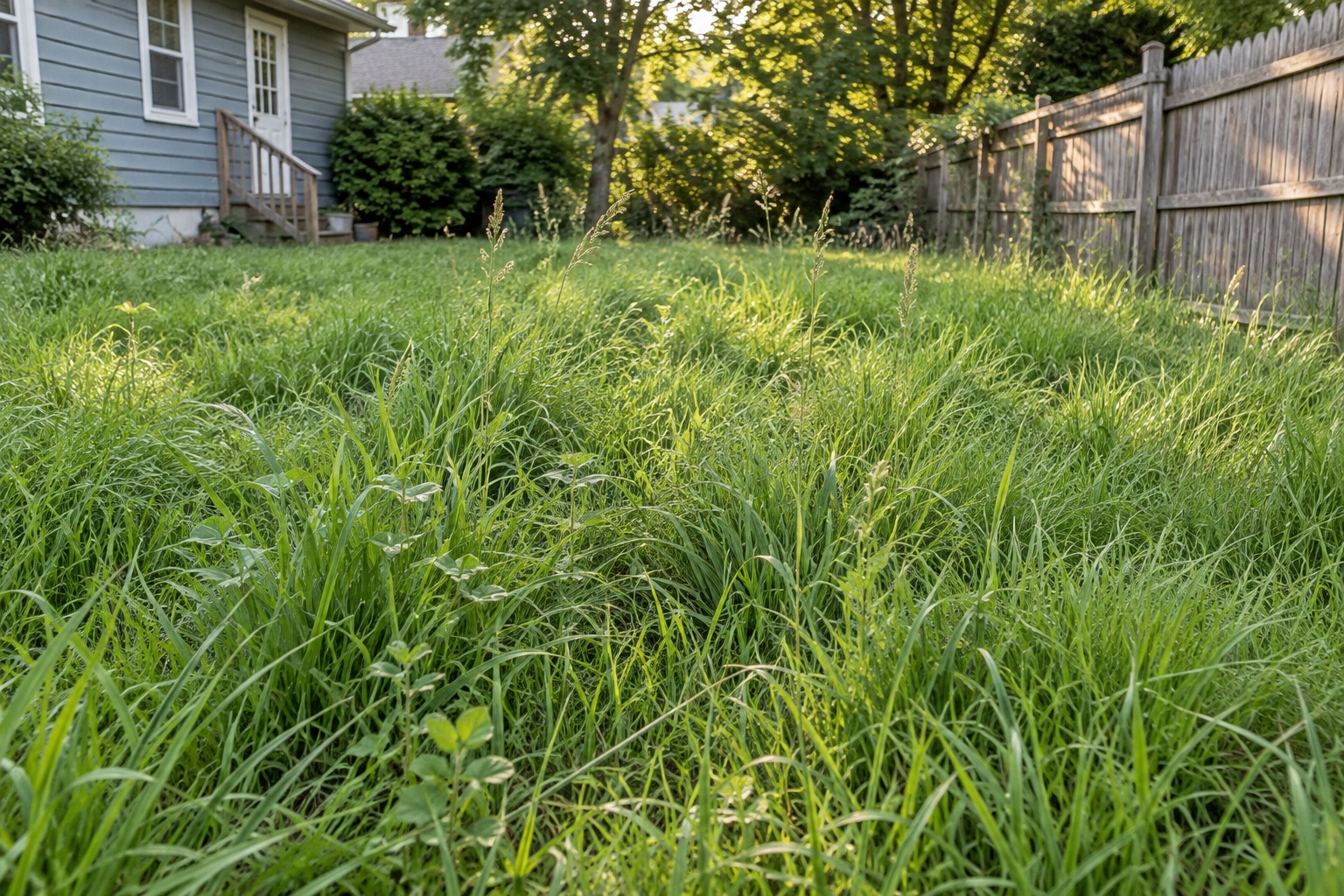
A missed visit, a broken mower, or a stretch of rainy weather can turn a normal cut into a catch-up job. The temptation is to lower the deck and make everything look finished immediately. A better plan is to assess the property, make a conservative first cut, deal with excess clippings, and bring the lawn back into its normal routine. Here is how to think through that decision for a Southwest Missouri home.
Start with the lawn you have, not the height you want
Measure several representative areas before choosing a cutting height. The taller side yard may need a different approach from the shorter front lawn. Write down the approximate height, whether the grass is upright or flattened, and whether the ground feels firm. A photo beside a ruler is also useful when asking for an estimate.
The first visit and the finished maintenance routine are two different goals. Your first goal is a safe, manageable reduction. Your longer-term goal is consistent mowing at a suitable height for the grass species and season. Tell a lawn-care provider how long it has been since the last cut rather than describing every property as a standard mowing visit.
Use the one-third rule to plan the first cut
University of Minnesota Extension advises removing no more than one-third of the grass height at a mowing. For example, taking six-inch grass down to four inches removes one-third; taking it straight down to three inches removes half. That simple comparison explains why the normal deck setting may be too low for a catch-up visit.
Raise the mower within its approved adjustment range. If the grass is so tall that the mower cannot make a suitable cut, do not improvise by tilting the machine or modifying its guards. Ask for help with equipment appropriate to the growth. A residential lawn mower is not automatically suitable for brush, hidden debris, or severely neglected ground.
Plan stages instead of chasing a perfect finish today
Do not treat several progressively lower passes in one afternoon as several recovery periods. The total leaf removal still matters. A second pass used to collect loose clippings is different from repeatedly dropping the deck until an overgrown lawn reaches its usual height.
Let the lawn's condition and growth guide the next reduction rather than promising an identical number of days for every yard. Heat-stressed, wilted turf needs a different decision from actively growing grass in mild weather. If you are unsure how to recover a badly neglected lawn, ask a local turf professional to assess it before continuing.
For tall fescue, MU Extension's seasonal calendar lists a summer mowing range of three to four inches. Do not assume that figure applies to every grass type or that a tall lawn must reach the bottom of its range. Identify the grass and choose a sustainable maintenance height first.
Check the ground and operate within the mower's limits
Walk the entire area and remove toys, branches, wire, and other debris before mowing. Long grass can hide objects that would be obvious on a regularly maintained lawn. Keep people and pets away, retain the required guards, and follow the operating and slope limits in your own mower manual.
Toro's operating guidance for tall grass recommends a higher cutting setting, slower travel, and overlapping passes rather than taking a full-width cut. Those are useful principles, not permission to exceed your machine's capabilities. If it repeatedly plugs, stalls, or leaves an unacceptable cut, stop and reassess.
Wait when wet leaves, soft soil, or poor traction make the work unsafe. Before clearing a blockage, shut down, wait for moving parts to stop, and isolate the power source as your manual directs. Never reach beneath a mower that can start or whose blade is still moving.
Keep useful clippings, remove heavy mats
Mulching remains a good routine choice when short clippings disperse into the lawn. MU Extension explains that returning clippings recycles nutrients, but tall or wet growth is harder to mulch successfully. An overgrown first cut may require cleanup that an ordinary maintenance visit would not.
Inspect the surface after the cut. A light scattering is different from ropes or piles that cover the living grass. Gently rake up heavy accumulations or collect them with a manufacturer-approved bagging setup. Keep loose clippings off sidewalks, streets, and storm drains. Follow any recent lawn-treatment label restrictions when handling or disposing of them.
Do not buy a mulching blade expecting it to turn any height of grass into a clean one-pass finish. Blade shape, deck design, growth, and moisture all affect the result. Once growth is manageable, the right matched blade can support normal clipping return; a simple rake is useful for the exceptional heavy cleanup.
What to send Pebble Creek for a catch-up mowing estimate
Our lawn-care work covers real properties with different access, slopes, and mowing needs. For an overgrown-lawn request in our Southwest Missouri service area, send a wide photo and a close view of the grass, plus your address and approximate last mowing date. Include gate access, steep areas, debris, and any spots that stay wet.
Ask whether the estimate includes collecting excess clippings and whether more than one visit is recommended. That makes the scope clearer before work begins. A catch-up cut is not necessarily the same amount of work as the recurring service that follows, and neither a price nor a recovery timeline should be assumed from a photograph alone.
Keep the next visit from becoming another catch-up job
Once the lawn is manageable, check growth between visits instead of waiting for it to look overgrown again. Record the date and finished height so the next decision is based on something concrete. If a trip or mower repair will interrupt the routine, arrange help before the gap becomes several missed cuts.
Rain delays deserve a plan, not a lower deck setting. Discuss the next safe mowing window and any catch-up work with your provider. The aim is a repeatable routine: appropriate height, manageable clippings, and a property that stays easier to care for.
Related Lawn Guide chapters
Useful gear for this topic
Compare tools for clipping cleanup and the return to routine mowing
A rake handles heavy leftover clippings; an exact-fit mulching blade supports routine cuts once the lawn is manageable. Neither replaces a staged mowing plan. These are category comparisons, not claims that our crew tested every item in the search results.
As an Amazon Associate, Pebble Creek earns from qualifying purchases. Your price is not increased. How we choose recommendations.
Mulching blade for your exact mower
Best for: Processing routine clippings into smaller pieces that settle back into the turf.
Match the mower model, blade length, center hole, lift, and manufacturer part number before ordering.See current Amazon options ↗Professional-style leaf and landscape rake
Best for: Gently gathering heavy piles of loose grass clippings after a catch-up cut.
Choose flexible tines for turf cleanup and avoid aggressive raking of stressed or newly established grass.See current Amazon options ↗Sources and further reading
- University of Minnesota Extension: Mowing Practices for Healthy Lawns ↗
- MU Extension: Cool-Season Grasses Lawn Maintenance Calendar ↗
- MU Extension: Don't Bag It Lawn Care ↗
- Toro: Recycler Mower Operating and Safety Instructions (use your own model's manual) ↗
This chapter provides general educational information. Site conditions vary, and product labels and equipment manuals control whenever a product or machine is used.