
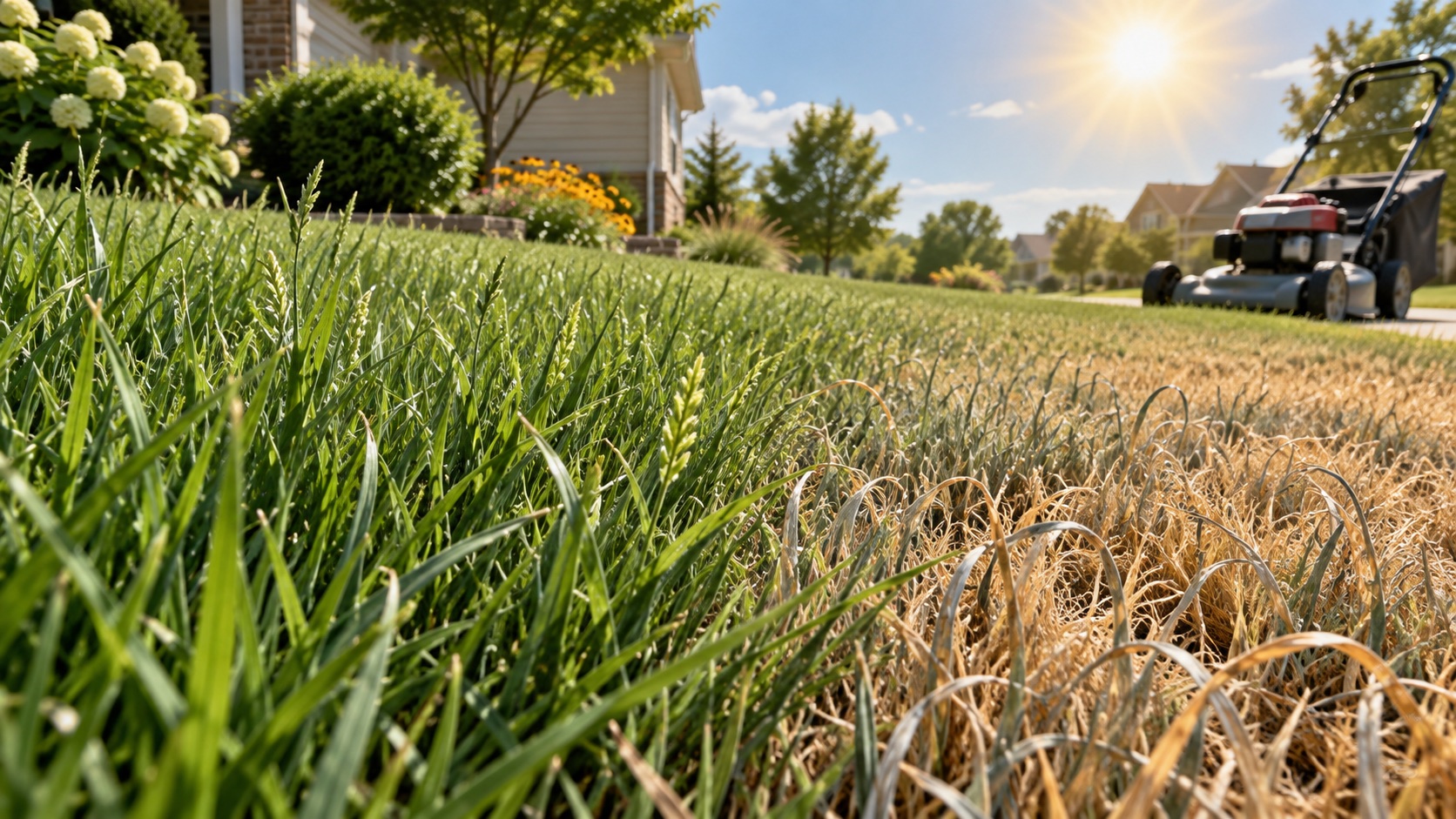
A July mowing plan should not be a copy of April's. For established tall fescue around Nixa, Ozark, and Springfield, summer means protecting the grass that is there, not forcing spring growth. The useful decision is simple: does this lawn need a careful cut today, a longer interval, or a break from mower traffic? Here is how to decide without treating every brown patch—or every hot afternoon—the same way.
Keep more leaf: aim near 3.5–4 inches for tall fescue
MU Extension's seasonal calendar lists 3–4 inches for tall fescue in summer, and its turf specialists recommend roughly 3.5–4 inches to help turf compete with weeds and prepare for summer stress. The upper part of that range is a useful starting point for established tall fescue. More leaf shades the soil and supports the plant; a very short cut is not a shortcut to a healthier lawn.
Check the actual grass after mowing rather than assuming a lever setting equals inches. Measure several representative spots without flattening the leaves. Do not transfer this height directly to zoysia or bermudagrass: warm-season lawns have different needs. If you do not know your grass, identify it before changing the whole property's setup.
Change the interval when growth changes
Mow according to growth while removing no more than one-third of the leaf height at once. At a 4-inch target, 6-inch grass is already at that limit; at a 3.5-inch target, the corresponding height is about 5.25 inches. These are upper limits for planning, not instructions to wait until every lawn reaches them.
An irrigated lawn that keeps growing may still need regular mowing. A dry lawn that barely grows may need a longer interval or no cut. Walk it and measure again before the next visit. When arranging Pebble Creek mowing, tell us which areas receive irrigation and whether conditions have changed; one fixed interval should not be mistaken for a guarantee that every section needs cutting.
- Growing, upright grass and firm footing: use the normal measured-height and one-third checks.
- Little new growth: recheck later instead of mowing just to refresh stripes.
- Wilted or dormant turf: postpone mowing and unnecessary traffic while assessing moisture and recovery.
Recognize a reason to pause—not just a temperature
Folded or curled leaves, a dull blue-gray cast, and footprints that linger can indicate moisture stress. Look at several areas rather than judging only the strip beside hot pavement. MU Extension cautions that mowing drought-stressed or dormant turf can leave damaging wheel tracks. Brown grass with little growth is not asking for a shorter cut.
There is no single air-temperature reading in this guide that automatically makes mowing safe or unsafe. Soil moisture, grass condition, growth, equipment, and operator safety all matter. A cooler part of the day may be more workable, but wet leaves, slippery slopes, or soft soil can still make postponement the better choice. Do not trade heat stress for rutting or unsafe footing.
Measure water before adding more
For an actively growing lawn, MU Extension gives roughly 1 inch of total rainfall plus irrigation per week as a starting summer guideline, adjusted for soil, weather, and rooting. It is not an automatic extra inch after a soaking rain. Use a rain gauge for rainfall and several straight-sided catch containers to check sprinkler coverage; a dry corner and a saturated low spot need different attention.
Water early in the morning when possible, and allow water to soak into the root zone rather than applying a token splash every day. If water runs off, pause and let it infiltrate before continuing. Follow local watering restrictions. Newly seeded lawns, fresh sod, and a lawn managed through dormancy need a different watering plan from established, actively growing turf; do not apply this overview as a universal prescription.
Keep the finish gentle around edges and turns
A high mower setting loses its benefit if a string trimmer cuts the edges down to stems. Keep the finished height consistent beside sidewalks, trees, and beds. Use controlled turns rather than repeatedly pivoting on the same dry patch, and avoid unnecessary extra passes for appearance. Follow your mower's manual for slopes, operating conditions, and maintenance.
Sharp, correctly installed blades make a cleaner cut. Routine fine clippings can remain where they disperse into the turf, but heavy piles should not blanket the lawn. If rain restarts rapid growth after a missed visit, reduce excessive height in stages instead of taking the whole backlog off in one aggressive pass. Our Chapter 1 guides explain blade care, clippings, and catch-up mowing separately.
Do not try to fertilize your way out of heat stress
Summer slowdown does not by itself mean the lawn needs a heavy nitrogen application. MU's cool-season calendar emphasizes fall feeding rather than forcing summer growth. Do not use a green-up product as a substitute for identifying the grass and checking moisture, mowing height, and the actual cause of decline. Follow product labels and a soil-test-based seasonal plan.
Brown areas can have more than one cause. Note when they appeared, whether they follow wheel paths or irrigation patterns, and whether they are spreading. Take a close photo and an overall photo before choosing a treatment. If the cause is unclear, ask an Extension specialist or qualified lawn professional rather than assuming every patch is drought or buying a fungicide on color alone.
Your next-visit checklist
Before the next cut, write down the measured height, recent rainfall, any irrigation, and the areas that are not recovering normally. Those observations are more useful than ‘It is summer, so cut it every other week.’ Keep the plan flexible as conditions change, while maintaining the height target whenever the lawn is ready to mow.
For service help, send Pebble Creek your address, grass type if known, current mowing interval, and photos of the problem areas. We can discuss mowing needs within our service area. This article covers the mowing decision; the next seasonal topic will explain the separate choice of managing tall fescue through summer dormancy.
Related Lawn Guide chapters
Useful gear for this topic
Tools worth comparing
These links help you compare the right type of product without replacing the equipment manual, product label, or an exact fitment check.
As an Amazon Associate, Pebble Creek earns from qualifying purchases. Your price is not increased. How we choose recommendations.
Simple outdoor rain gauge
Best for: Comparing an easy-to-read stake gauge with a bracket-mounted gauge to record actual rainfall before adding irrigation.
Check the scale, capacity, mounting instructions, and freeze-care guidance. Place it clear of roofs and tree cover; one rainfall reading does not diagnose soil moisture or prove sprinkler coverage.See current Amazon options ↗Grass-height measuring ruler
Best for: Comparing a simple inch-marked ruler with a dedicated turf-height gauge to check growth and the finished cut. A ruler you already own can work.
Choose readable inch markings and measure standing grass from the soil without flattening it. Keep hands and tools away from operating equipment; follow the mower manual for any deck adjustment.See current Amazon options ↗Sources and further reading
- MU Extension: Cool-Season Grasses Lawn Maintenance Calendar ↗
- University of Missouri: Raise the Deck ↗
- MU Extension: Home Lawn Watering Guide ↗
- MU Extension: Water-Efficient Gardening and Landscaping ↗
- MU Extension: Don't Bag It Lawn Care ↗
This chapter provides general educational information. Site conditions vary, and product labels and equipment manuals control whenever a product or machine is used.